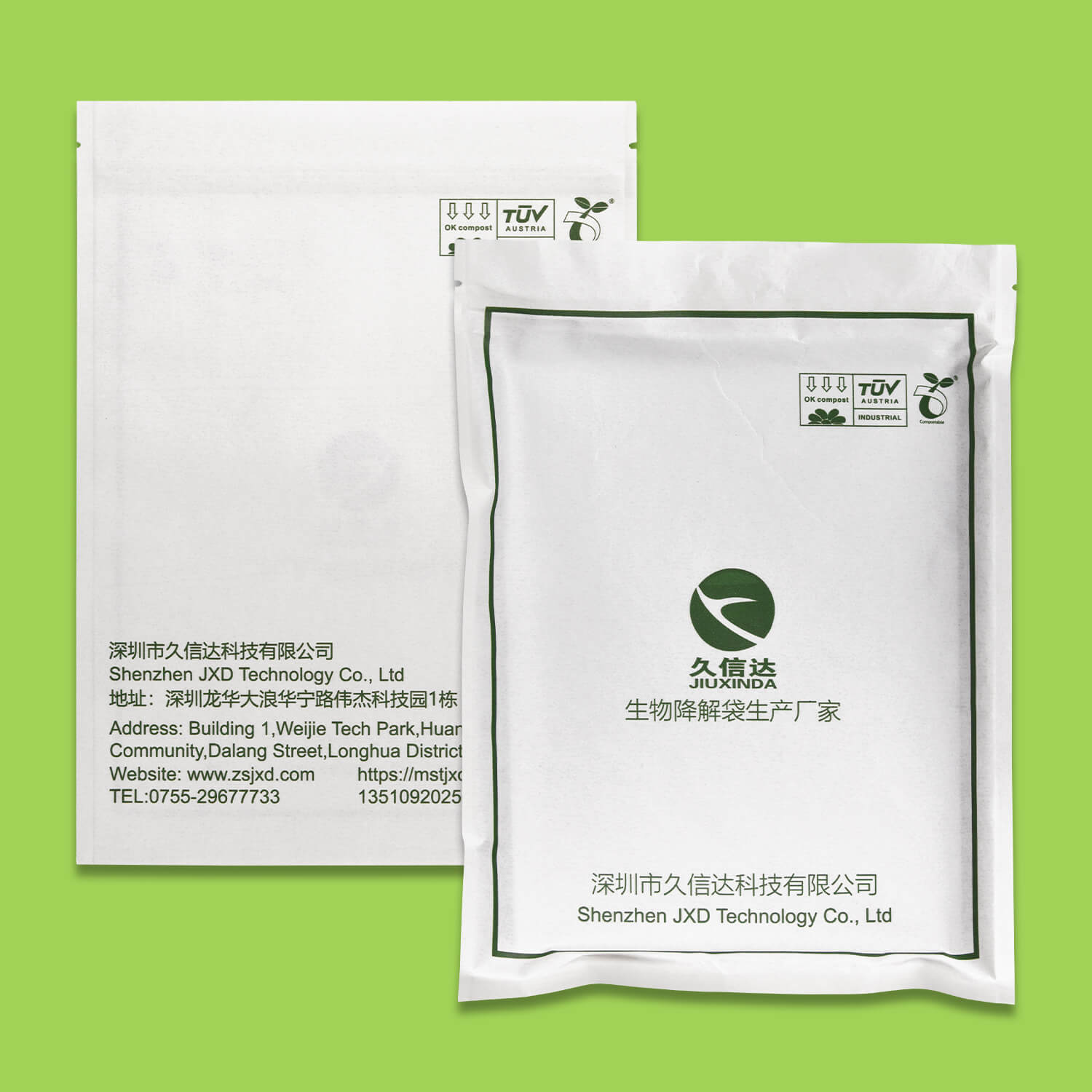
With the spread of environmental awareness, biodegradable bags are gradually replacing traditional plastic bags and entering scenarios involving food contact, such as supermarkets and restaurants. However, there is always a key question lingering in consumers’ minds: Have all biodegradable bags passed food-grade safety certification? The answer is not absolute. Whether a biodegradable bag obtains certification depends on raw material selection, production standards, and testing procedures, and the key logic behind this needs to be analyzed from a scientific perspective.
First, it is essential to clarify that food-grade safety certification is the “admission ticket” for biodegradable bags to come into contact with food, but not all biodegradable bags have this qualification by default.
China has formulated the mandatory national standard GB 4806.7-2016 for plastics in contact with food. This standard clearly requires that plastic products in direct contact with food must pass a series of strict assessments, including migration testing (e.g., for heavy metals and volatile organic compounds) and sensory testing (no peculiar smell, no foreign matter). If a biodegradable bag is to be used for food packaging, it must comply with this standard and obtain certification from an authoritative organization. Uncertified products may pose a risk of harmful substance migration, threatening human health.
From the perspective of raw materials, the material of a biodegradable bag directly determines whether it can pass food-grade certification.
Currently, mainstream compliant raw materials include polylactic acid (PLA) and polybutylene adipate/terephthalate (PBAT). These materials themselves have good biocompatibility and are not prone to releasing harmful substances in high-temperature or acidic environments. However, some low-cost products may add impurities such as industrial-grade calcium carbonate and recycled materials. This not only reduces degradation performance but also may introduce heavy metals or toxic additives. Such products often fail food-grade testing and can only be used in non-food fields (e.g., garbage storage).
The control of the production process is also crucial.
Even if compliant raw materials are used, the safety of the final product may still be affected if there is cross-contamination during production (e.g., sharing a production line with non-food-grade plastics) or if the processing temperature is too high, causing the material to degrade and produce harmful substances. Formal enterprises will establish dedicated food-grade production lines, be equipped with online monitoring equipment, and conduct regular third-party testing to ensure that each batch of products meets certification standards. In contrast, small workshop-style production often lacks these control measures, making it difficult to guarantee product quality.
For consumers, how to identify whether a biodegradable bag has passed food-grade certification?
They can adopt the “look and check” method: Look at product labels: Regular food-grade biodegradable bags will be marked with “for food contact”, “GB 4806.7”, and a degradation certification mark (e.g., the “compostable” icon). Check the test report: Ask the merchant for a food contact safety test report issued by a third-party organization, and focus on whether the migration indicators are qualified.
It is worth noting that the “environmental protection attribute” and “food-grade safety attribute” of biodegradable bags are not bound together.
Some products can achieve biodegradation but fail to meet food contact safety requirements due to issues with raw materials or production. Conversely, biodegradable bags that meet food-grade standards also need to pass degradation performance certification (e.g., GB/T 20197-2006) to truly achieve “safety and environmental protection”. When purchasing, consumers need to pay attention to both qualifications to avoid falling into the cognitive misunderstanding that “environmental protection means safety”.
In conclusion, whether a biodegradable bag passes food-grade safety certification depends on whether the product complies with national standards and has undergone professional testing. Jiuxinda Biodegradable Bags have passed food-grade safety certification and can safely come into contact with food. Under the trend of green consumption, consumers need to improve their ability to identify and choose products that comply with both standards, thereby protecting their own health and promoting the standardized development of the green consumer market.