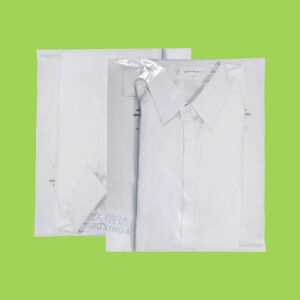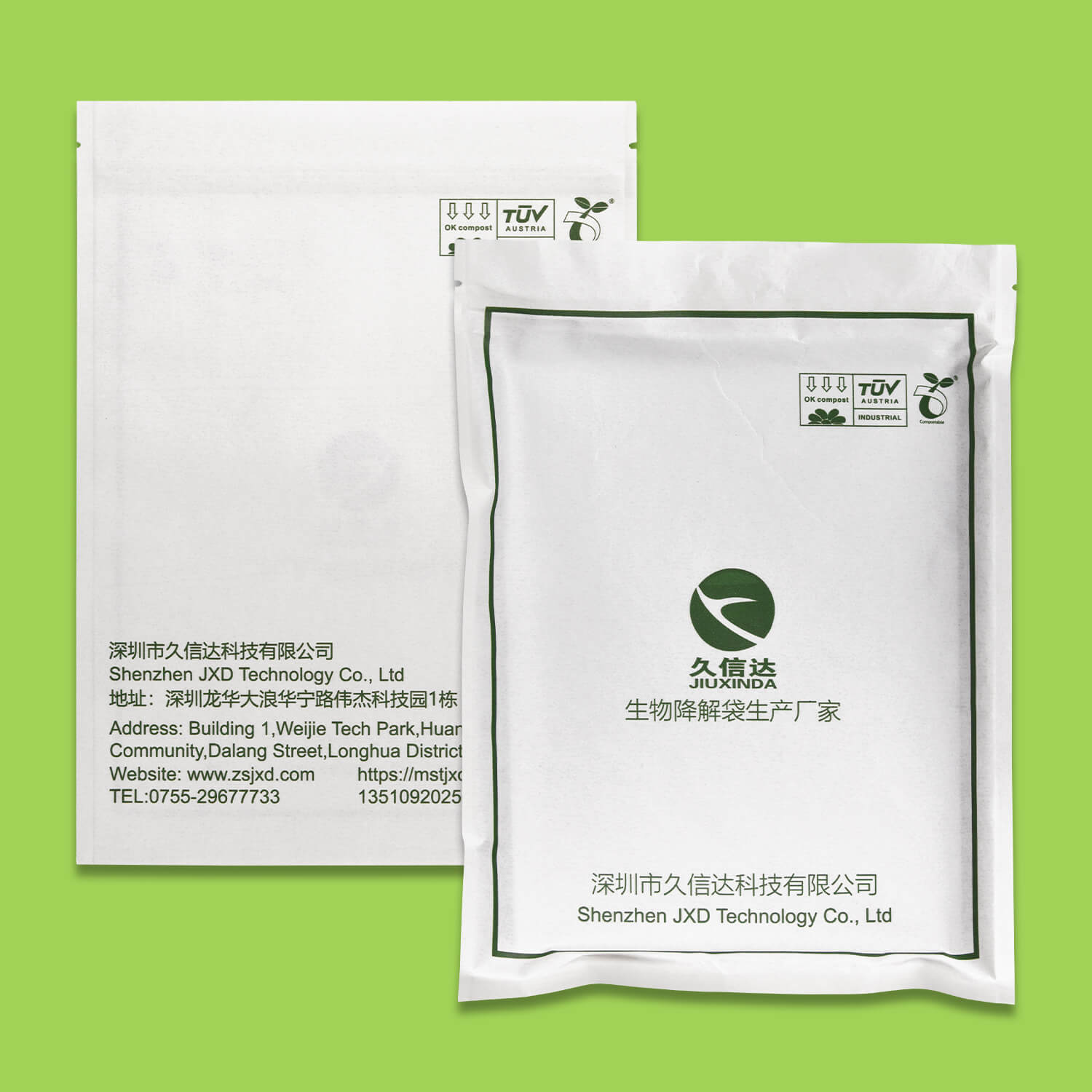
In the selection of environmentally friendly packaging, biodegradable bags and paper bags are often regarded as alternatives to traditional plastic bags. However, there are significant differences between the two in terms of performance, environmental friendliness, and applicable scenarios. Compared with paper bags, biodegradable bags are gradually demonstrating unique advantages in multiple fields by virtue of better durability, wider scenario adaptability, and lower resource consumption throughout the whole life cycle, making them an important choice for eco-friendly packaging.
From the perspective of durability and scenario adaptability, biodegradable bags are far superior to paper bags and can meet more complex usage needs. The biggest shortcoming of paper bags lies in their poor water resistance and anti-damage capability — they tend to soften and deform when exposed to water or humid environments, and are prone to leakage when holding items with soup or sauce. If the load exceeds 1kg, the seams of the paper bag may even tear. In contrast, biodegradable bags (especially those made of PLA/PBAT blended materials) have good water resistance and flexibility. They can maintain structural integrity even when in contact with a small amount of water. Regular products can bear a load of 2-3kg, and some reinforced biodegradable bags can even withstand weights above 5kg, fully meeting the needs of daily shopping, takeaway packaging and other scenarios. For example, when shopping on a rainy day, if a paper bag is not additionally coated with a film, it will be damaged due to water absorption within a few minutes, causing items to fall. Biodegradable bags, however, are waterproof without the need for film coating, providing stable protection for items and offering stronger adaptability.
In terms of environmental performance throughout the whole life cycle, the advantages of biodegradable bags are even more prominent. Although paper bags are recyclable and easily degradable, their production process has problems of high energy consumption and high pollution: producing 1 ton of paper bags requires consuming about 20 adult trees, and the papermaking process needs a large amount of water resources (about 100 tons of water per ton of paper). At the same time, it discharges wastewater containing alkali and bleaching agents, imposing a burden on the ecological environment. In contrast, if biodegradable bags are produced using non-grain raw materials (such as straw and cassava starch), they not only do not consume forest resources but also realize the resource utilization of agricultural wastes. Their degradation process is also more environmentally friendly — in the natural environment, biodegradable bags can decompose into carbon dioxide and water within 6-12 months without releasing toxic substances during the degradation process. If paper bags are randomly discarded (not entering the recycling system), they will rot in humid environments, but the decomposition speed is relatively slow (taking about 2-3 years). Moreover, if the paper contains ink or film coating, it may release harmful substances. In addition, the transportation and storage costs of biodegradable bags are lower: under the same capacity, the weight of a biodegradable bag is only 1/3 that of a paper bag, and it can be folded and compressed, saving more than 50% of space during transportation and indirectly reducing carbon emissions in the logistics link.
In terms of usage cost and economy, biodegradable bags are also gradually becoming competitive. In the past, due to the high cost of raw materials and processes, the unit price of biodegradable bags was much higher than that of paper bags. However, with technological iteration and large-scale production, the cost of biodegradable bags has dropped significantly — in 2024, the unit price of ordinary biodegradable bags is about 0.15-0.2 yuan per piece, which is basically the same as that of film-coated waterproof paper bags (0.18-0.25 yuan per piece), and their service life is longer. From the perspective of long-term use, the damage rate of biodegradable bags is much lower than that of paper bags, which can reduce the loss of items caused by packaging damage and indirectly lower the usage cost. For example, comparative data from a chain supermarket shows that after using biodegradable bags, the packaging damage rate dropped from 8% (with paper bags) to 2%, reducing the annual cost of customer complaints and commodity losses caused by packaging problems by about 120,000 yuan.
In addition, biodegradable bags are also superior to paper bags in functional expandability. Through material modification, biodegradable bags can achieve more special functions, such as high-temperature resistance (withstanding 80℃ for a short time), oil resistance (suitable for high-oil takeaway food), and microwave heating compatibility (for some food-grade biodegradable bags). These functions are difficult for paper bags to achieve (paper bags are easy to burn at high temperatures and prone to oil penetration when in contact with oil). In the scenario of fresh food packaging, biodegradable bags can also be added with antibacterial components to extend the fresh-keeping period of food. However, paper bags, due to their easy moisture absorption, may instead accelerate food spoilage.
Comprehensively speaking, the advantages of biodegradable bags in durability, environmental friendliness, economy, and functional expandability make them a better eco-friendly choice in more practical scenarios. With further technological development, the advantages of biodegradable bags will become more prominent, providing strong support for promoting the green transformation of the packaging industry.