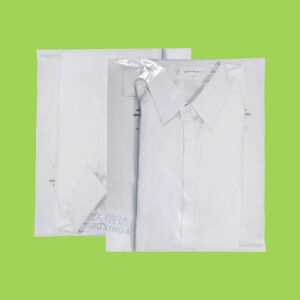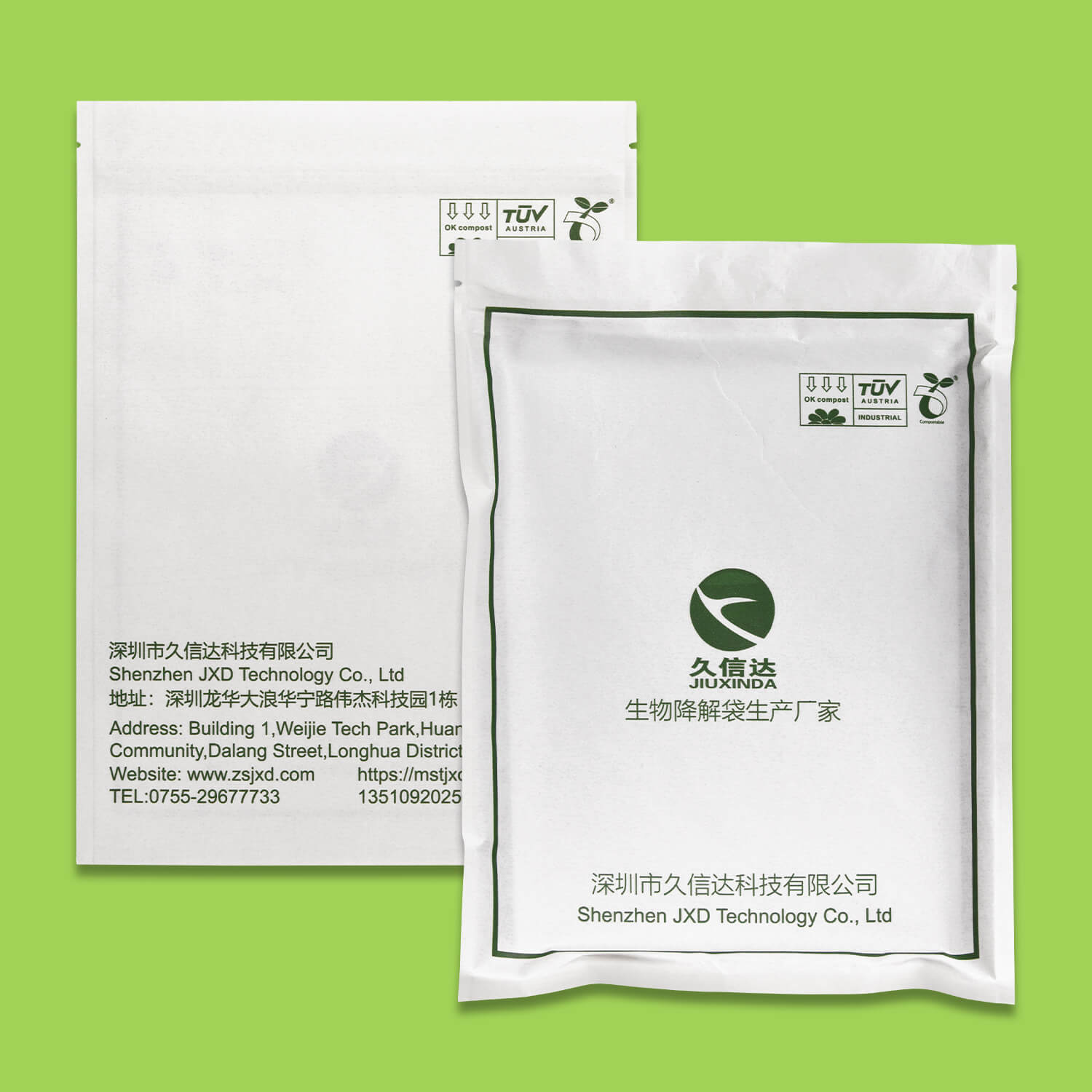
With the increasing popularity of environmental protection awareness, eco-friendly bags have become the mainstream choice to replace traditional plastic bags. Among various eco-friendly bags, biodegradable bags stand out due to their unique advantages. Compared with non-woven bags, ordinary degradable bags, paper bags, etc., biodegradable bags demonstrate irreplaceable value in terms of environmental friendliness, application adaptability and long-term sustainability, providing a better solution to address white pollution.
1. Full-Cycle Degradation: Reducing Environmental Burden from the Root
The core advantage of biodegradable bags lies in their complete degradation without residues, which is the essential difference between them and other eco-friendly bags. Although non-woven bags (mostly made of polypropylene) can be reused, they are difficult to degrade naturally after being discarded. Incinerating them will produce harmful gases, while landfilling will occupy land for a long time. Ordinary degradable bags are mostly of the photo-oxidative degradation type, which require specific light and temperature conditions, leading to incomplete degradation and easily causing microplastic pollution to soil and water sources. Paper bags, though degradable, consume a large amount of wood during the production process, and are prone to causing water eutrophication after degradation. However, biodegradable bags are made from natural biomass materials such as corn starch and PLA (polylactic acid). In natural environments (soil, seawater, composting conditions), they can be completely decomposed by microorganisms into carbon dioxide, water and organic fertilizers. There is no residue of toxic or harmful substances throughout the process, truly realizing the concept of “originating from nature and returning to nature” and fundamentally solving the problem of secondary pollution caused by discarded eco-friendly bags.
2. Wide Application Adaptability: Balancing Practicality and Environmental Protection
Biodegradable bags far outperform similar eco-friendly bags in terms of usage performance and application adaptability. Paper bags have poor water resistance and weak load-bearing capacity, and are easily damaged when exposed to water, making them difficult to be used for holding items such as fresh produce and wet waste. Non-woven bags have strong air permeability, so they are not suitable for storing food that needs to be kept fresh. Moreover, they are prone to breeding bacteria after repeated use, resulting in high cleaning costs. Ordinary degradable bags have the problem of insufficient toughness and are easy to tear, which limits their application in holding heavy objects. Through technological improvement, biodegradable bags have good load-bearing capacity, water resistance and flexibility. They can not only meet the needs of daily scenarios such as supermarket shopping, takeaway packaging and garbage storage, but also adapt to special scenarios like fresh cold chain and medical waste disposal. For example, when used for fresh produce packaging, their excellent barrier property can extend the fresh-keeping period of food; when used for collecting kitchen waste, they can be degraded together with the waste in the composting system, avoiding the trouble of secondary treatment of eco-friendly bags after waste classification.
3. Low-Carbon Production: Contributing to Sustainable Development
Compared with other eco-friendly bags, the production process of biodegradable bags has more significant low-carbon advantages. The production of non-woven bags consumes a large amount of petroleum resources, and generates waste gas and wastewater pollution during the processing. The production of paper bags relies on deforestation, which damages the forest ecosystem. Meanwhile, the papermaking process consumes a large amount of water resources and discharges pollutants. However, the raw materials of biodegradable bags are mostly renewable biomass resources, such as corn and straw. During the planting of these raw materials, carbon dioxide can be absorbed, realizing carbon cycle. The production process adopts green technologies, with energy consumption much lower than that of traditional plastic and non-woven fabric production, and minimal pollutant emissions. According to data, the production energy consumption of biodegradable bags is only 60% of that of traditional plastic bags, and carbon emissions are reduced by about 40%. Their environmental impact throughout the whole life cycle is far lower than that of other eco-friendly bags, providing effective support for achieving the “dual carbon” goals (carbon peaking and carbon neutrality).
In conclusion, biodegradable bags show significant advantages in degradation performance, application adaptability and low-carbon production. They not only solve the problem of secondary pollution of traditional eco-friendly bags, but also balance practicality and sustainability. With the improvement of environmental protection policies and the continuous advancement of technology, biodegradable bags will surely become the mainstream choice in the eco-friendly bag market, injecting strong impetus into promoting green development and building an ecologically livable environment.