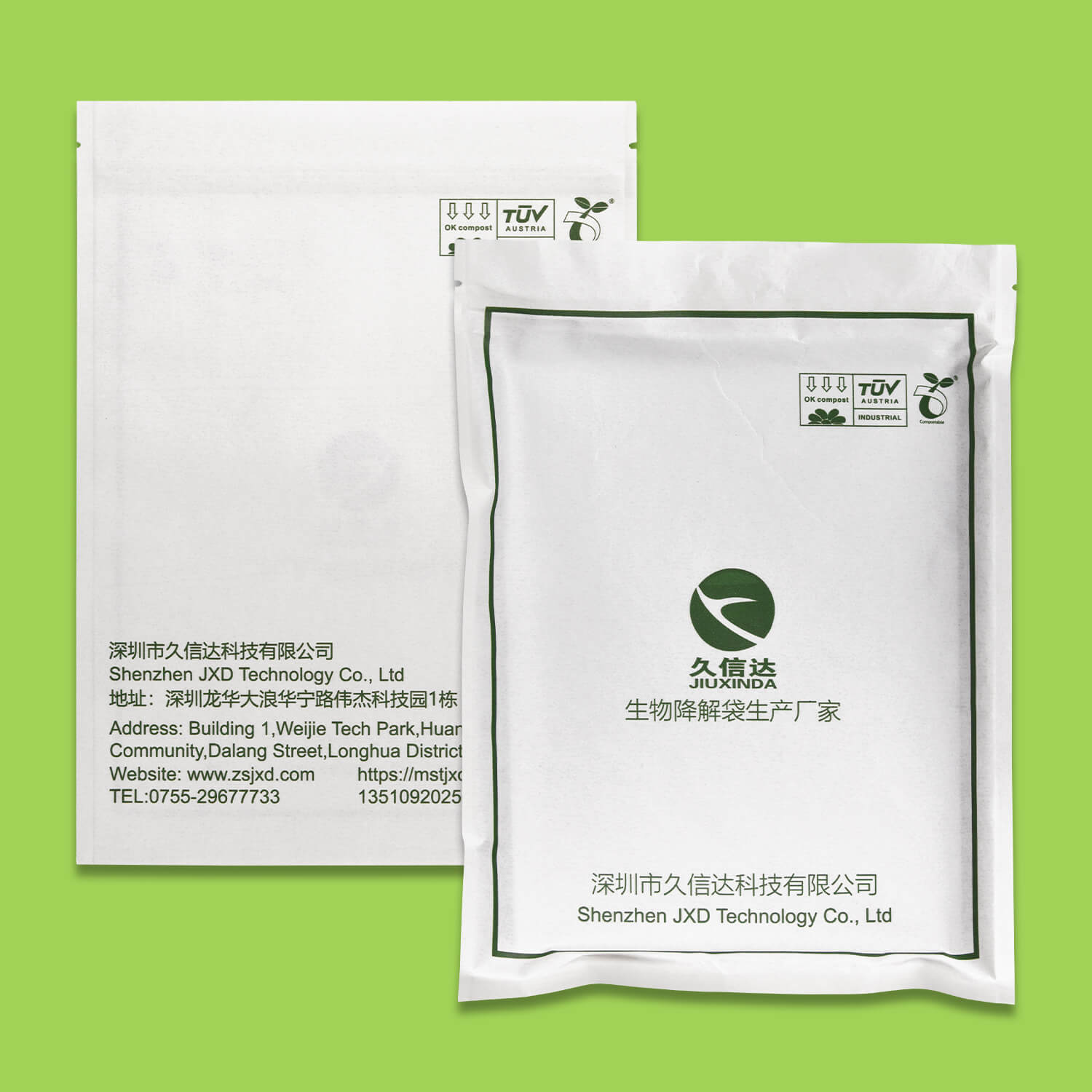
Today, with the in-depth implementation of the “plastic ban”, biodegradable bags are regarded as ideal alternatives to traditional plastic bags, and their advantage in production energy consumption has become a key environmental highlight. Data shows that there is a significant gap in energy consumption between biodegradable bags and ordinary plastic bags, providing an important path for global energy conservation and carbon emission reduction.
The production energy consumption of biodegradable bags is significantly lower than that of ordinary plastic bags. Taking the mainstream polylactic acid (PLA) biodegradable bags as an example, each kilogram of production consumes 44.7 million joules of energy, while the unit energy consumption of traditional plastic bags is as high as 73-86 million joules. The former is about 40%-48% lower than the latter. What is more noteworthy is that if the PHA biodegradable plastic with the lowest energy consumption is used to replace PE plastic, nearly 70% of the energy consumption can be saved. This gap is particularly striking in large-scale production. Based on the global plastic output in 2019, a full replacement with biodegradable plastics could save 1-2.2×10¹⁹ joules of energy annually, accounting for 1.7%-3.8% of the global energy consumption that year.
The difference in energy consumption stems from the fundamental differences in raw materials and processes. Ordinary plastic bags use petroleum as raw material, and pre-links such as extraction and refining consume a lot of energy. Biodegradable bags, on the other hand, mostly use biomass raw materials such as corn and sugarcane. The carbon dioxide absorbed during the plant growth process can offset part of the carbon emissions from production. Even though PLA production requires precise control of the processing temperature at 170-230℃, and equipment modification may increase short-term energy consumption, advanced technologies have achieved optimization. The OBE masterbatch technology has widened the processing temperature range, reducing equipment energy consumption and defective product rates. The polycondensation technology has increased the polymerization efficiency to more than 95%, further reducing unit energy consumption.
It is worth noting that the energy consumption advantage also extends to the whole life cycle. The full-life-cycle carbon emissions of PLA bags are only 1/3 of those of PE bags, and the comprehensive carbon emissions are reduced by 70%. In China, over the past five years, by replacing traditional plastic bags, 1.2 million tons of petroleum resources have been saved and 840,000 tons of carbon dioxide emissions have been reduced, which confirms its dual benefits in energy and the environment. However, the production of materials such as PHA has the problem of large raw material consumption, and technical upgrades are needed to balance resource utilization and energy consumption advantages.
From production workshops to the global ecology, the energy consumption advantage of biodegradable bags is clearly visible. With technological iteration and large-scale production, this green packaging will play a greater role in the field of energy conservation and promote the transformation of the packaging industry towards low carbonization.