
Custom LED Strip Packaging Bags Made from Wood-Pulp Fiber
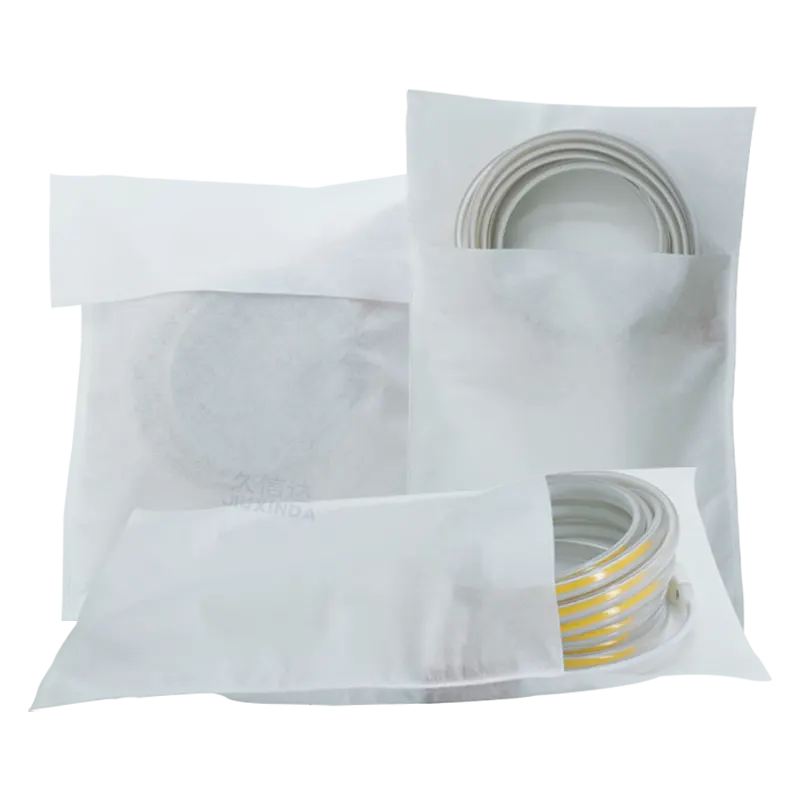
Custom LED strip packaging bags in semi-translucent wood-pulp fiber, sized to your coil. Printed branding, 5,000-bag MOQ and a typical 3–4 week lead time.
Explore paper bags →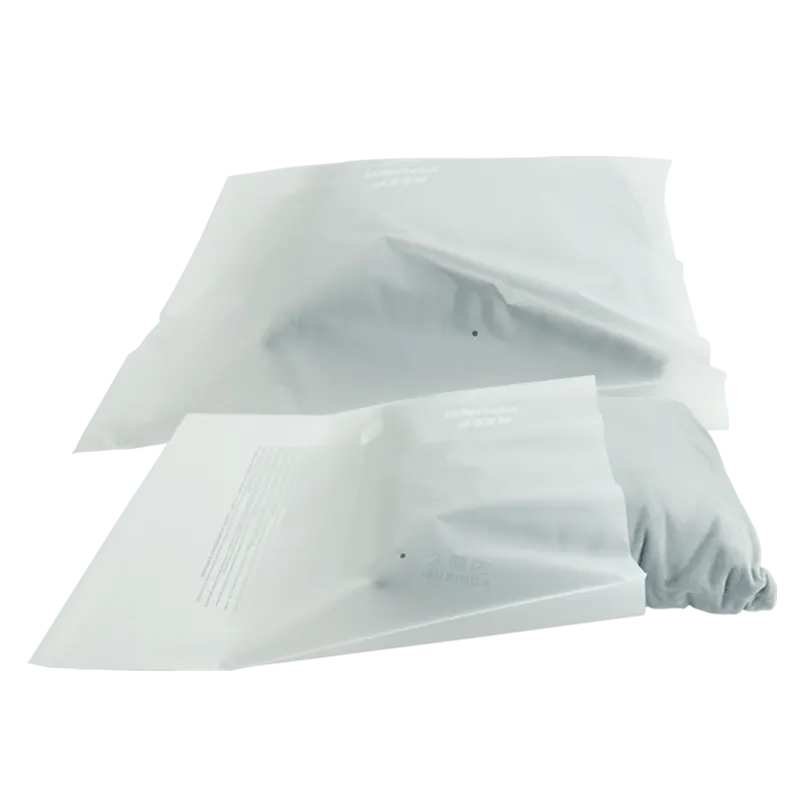
640,641
Custom frosted CPE cushion bags with vent holes, a 63-micron reference thickness, printed branding and GRS-documented recycled-content options. Request a sample.
PRODUCT OVERVIEW
Glassine is a smooth, dense and semi-transparent paper. It can help buyers see the contents while keeping the pack paper-based and printable. Compared with ordinary tissue paper, its closed surface can also reduce loose fibers around suitable clean parts.
The paper is not a universal rust barrier, moisture barrier or puncture-proof material. Heavy pieces, burrs, oily parts and corrosion-sensitive metal need a fit test and may require a different protective system.
TECHNICAL SPECIFICATION
Final values are confirmed on the approved drawing, material specification and sample.
| Product type | Custom Recyclable CPE Bags for Cushions |
|---|---|
| Film | CPE frosted film; exact resin composition to be confirmed on the material specification |
| Reference thickness | 0.063 mm / 63 µm per film layer; other gauges available by quotation |
| Size | Made to the product's dimensions and packing allowance |
| Appearance | Semi-translucent, matte/frosted finish |
| Opening | Open-top flat bag; alternative closures can be reviewed separately |
| Ventilation | Optional punched holes; hole size, quantity and placement are customizable |
| Printing | | Logo, care information, warning text and approved environmental claims |
| Recycled content | Available for eligible specifications; percentage and source to be agreed before production |
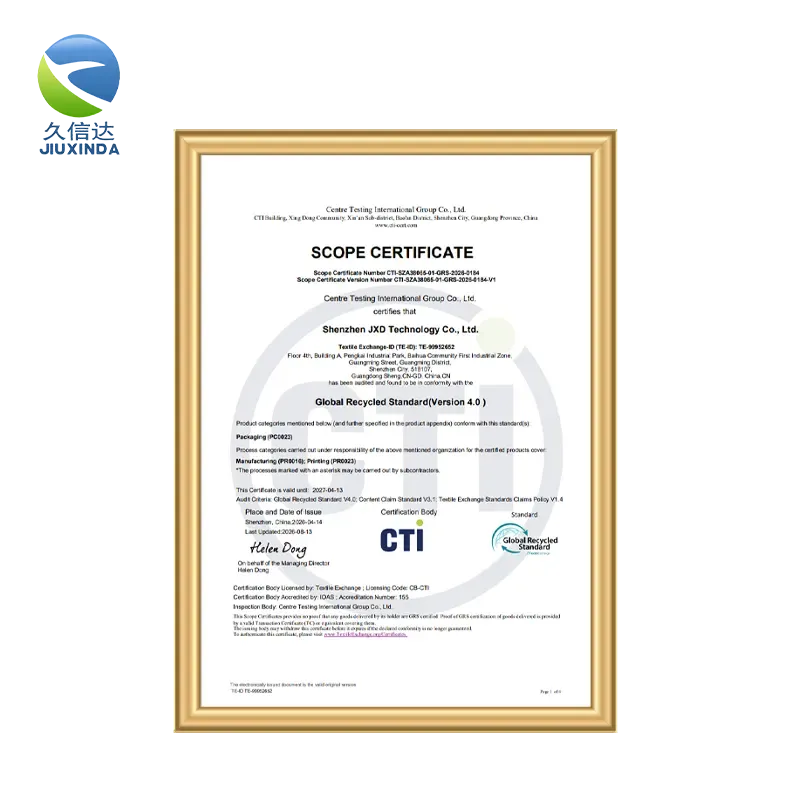
| Documentation | Applicable material and quality records; GRS scope certificate and transaction certificate (TC) for qualifying orders |
| Minimum order | | Quoted against size, film, print and recycled-content requirements |
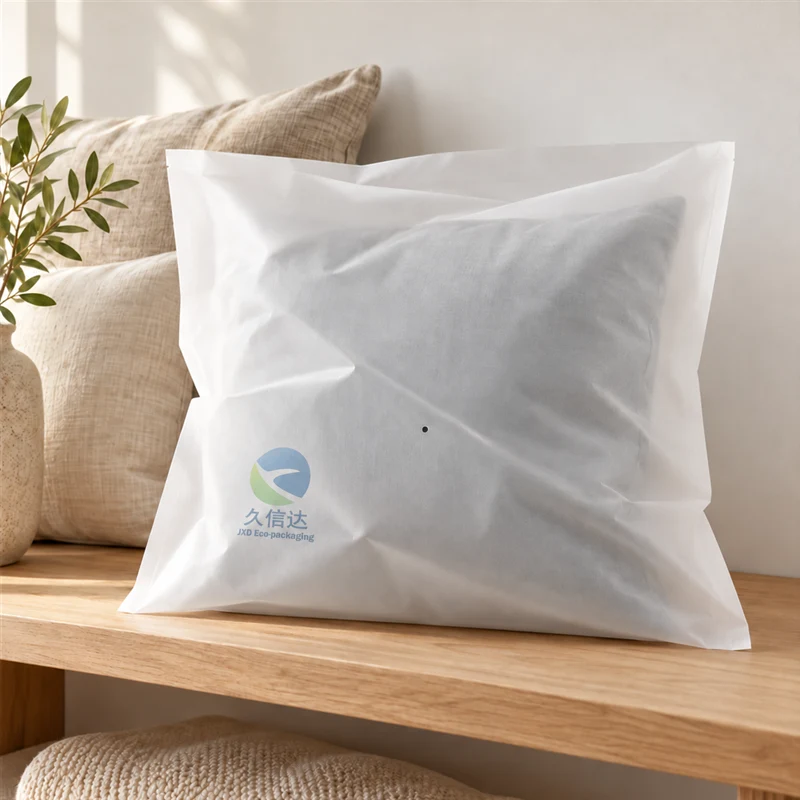
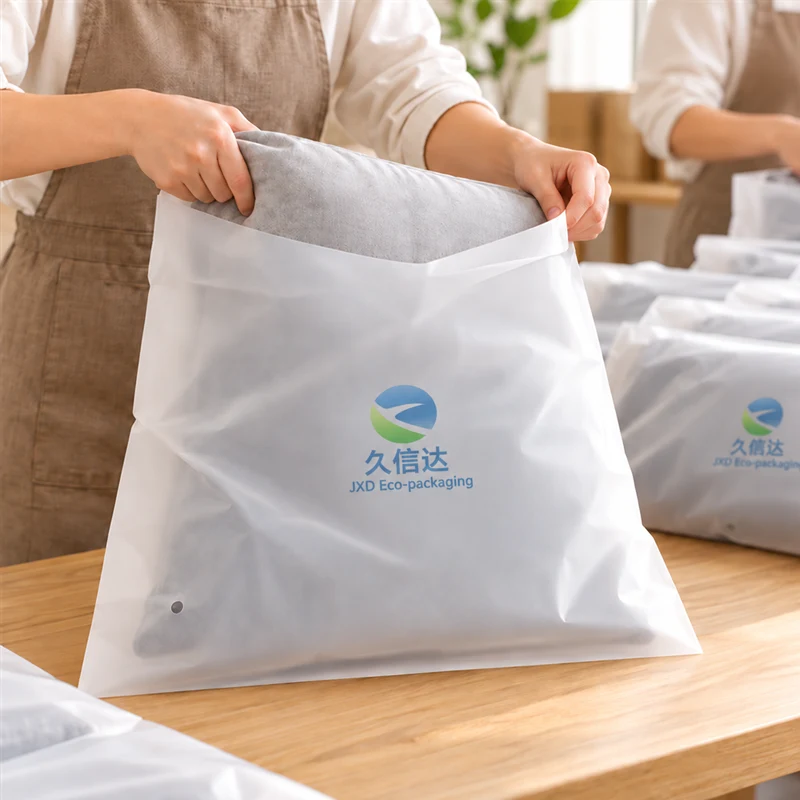
Frosted flat bags, made to fit bulky home-textile products. JXD Eco-packaging develops custom CPE bags for cushions, pillows and other soft goods. The semi-translucent matte finish gives the contents a clean, understated presentation, while optional ventilation holes let trapped air escape during packing. Specify the bag dimensions, film thickness, print and vent pattern around your product and packing process. Recycled-content options and supporting GRS documentation can be discussed for eligible orders. Any recyclability claim must be checked against the finished bag's composition and the destination market's recycling system.
A cushion may look straightforward to pack, but its fill can push against the sides and seams as it is inserted. A bag that is too tight slows packing and puts unnecessary stress on the edges. A bag that is too loose uses more material than needed and can leave excess film around the product. We therefore start with the cushion's finished dimensions, fill density and packing method before recommending a bag size.
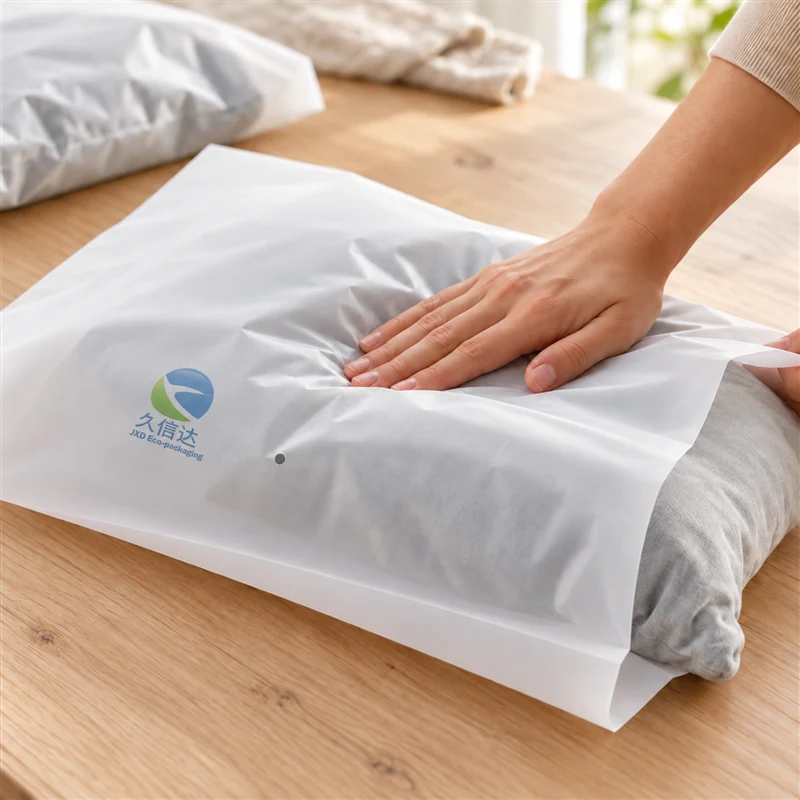
The frosted film partially reveals the product without the high-gloss look of a clear bag. Heat-sealed side edges help the bag hold its shape during handling. If air buildup is a concern, the position, diameter and number of ventilation holes can be set during sampling. These holes help air escape; they also mean the finished bag is not an airtight or moisture-proof package.
The source product uses a 0.063 mm (63 µm) single-layer film thickness as its reference specification. This is a starting point, not a universal requirement. The right gauge depends on product weight, bag size, the amount of compression during packing and the agreed handling tests.
Start with a physical cushion, a drawing or measured dimensions. We also need to know how the product is inserted, the planned order quantity and where the finished goods will be sold.
Fit and film. We allow for the cushion's depth and compressibility, then make a sample to test the opening width and gauge. The semi-translucent finish can be compared with a reference sample if color or visibility matters to your brand.
Vent holes. Hole diameter, count and location can be adjusted. We keep them clear of important artwork and test whether they release enough air during the actual pack-out.
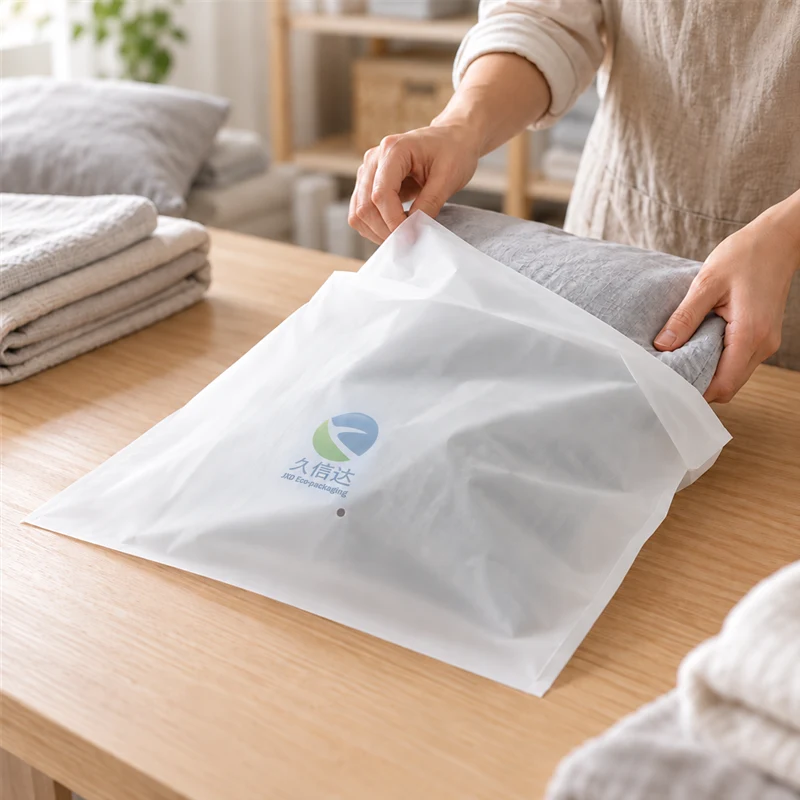
Print and documentation. Send vector artwork for your logo, care text and warnings. We approve placement and color on a proof or sample. If the order requires GRS-tracked material or a shipment-level TC, specify this at quotation stage so material sourcing and production records can follow the correct route.
Production begins after the sample and artwork are approved. We confirm the manufacturing lead time against the final specification rather than quoting one standard lead time for every bag.
Recycled content tells you how much recovered material is in the bag. GRS adds third-party verification and chain-of-custody requirements for eligible products. A transaction certificate covers a qualifying shipment and is issued by the certification body. The factory's scope certificate does not, on its own, certify every bag it makes.
Recyclability is a separate question. It depends on the finished film formulation, inks and other components, and on what local collection and processing systems accept. GRS certification does not guarantee that the bag can go into a particular recycling stream. We can provide the available material information so you can assess any on-pack claim for the destination market.
If a GRS mark or recycled-content percentage is to appear on the bag, the proposed wording and artwork should be reviewed against the applicable certification scope, product composition and claims rules before printing. CPE bags should not be described as biodegradable or compostable without separate product-specific evidence.
The approved sample and written specification set the benchmark for inspection. We can check the points that matter on your packing line:
Dimensions and thickness: check the agreed measurement points and tolerances.
Seams and edges: inspect seal continuity and test for splitting under the agreed handling conditions.
Appearance: compare frost level, color, print position and visible defects with the approved sample.
Vent holes: verify hole count, diameter and location, and check for ragged edges.
Pack-out performance: insert the actual cushion or a representative product to assess fit and air release.
Order documentation: match cartons, quantities and, where applicable, recycled-content records to the purchase order.
Test methods, sampling levels and pass/fail limits should be agreed before production. “Strong seams” on its own is not an acceptance standard.
The vented flat-bag format is suited to decorative cushions, pillow inserts, seat pads, soft toys and folded home textiles where a soft matte presentation and efficient packing are priorities. For apparel or other products that need a different opening, closure or barrier level, we can assess a separate construction. Vent holes are optional and should not be added to products that require a sealed moisture barrier.
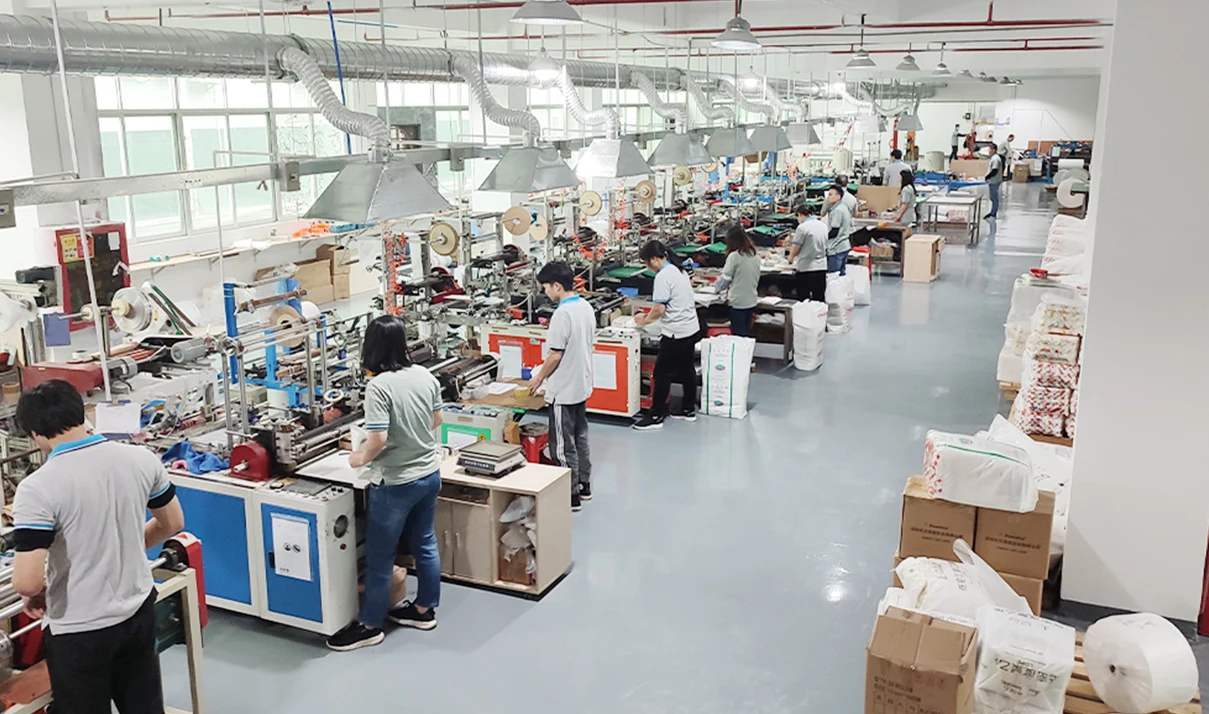
JXD Eco-packaging operates packaging factories in Shenzhen and Dongguan, with approximately 20,000 m² of combined factory space. Our team works from your sample or drawing, develops the bag specification and makes a physical sample for approval. Inspection points are agreed before the production run. Factory visits can be arranged, and we can share the company certificates and product documents relevant to the selected order.
To request a quotation, send the cushion dimensions, intended bag quantity, preferred thickness or reference sample, artwork, target market, required delivery date and any GRS/TC requirements. If possible, include a packed product sample so the bag fit and vent pattern can be tested before approval.
DOCUMENT REVIEW
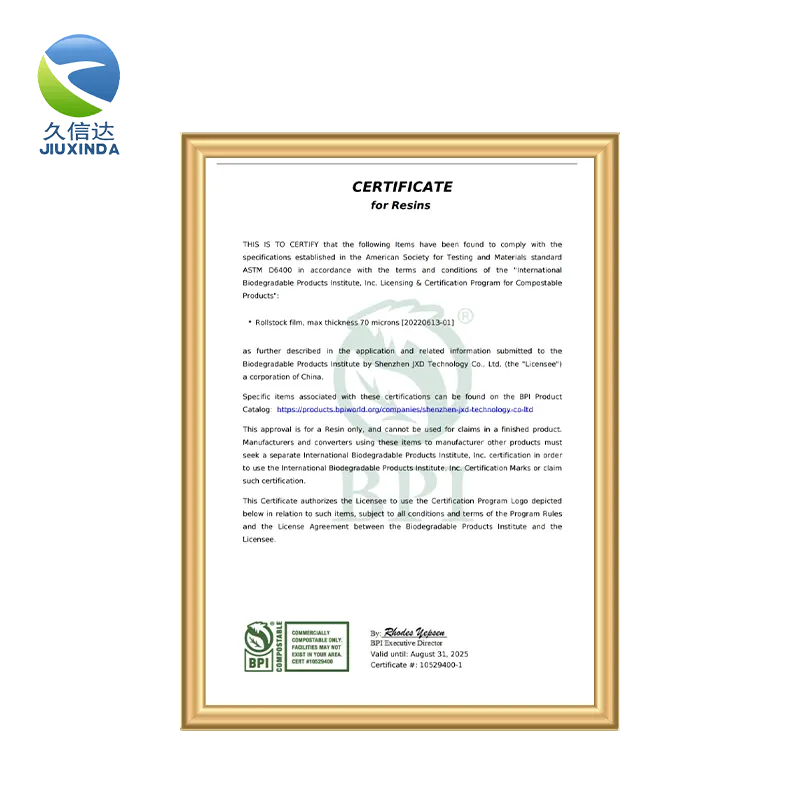
JXD Eco-Packaging displays its Global Recycled Standard (GRS) and ISO 9001 certifications on its website. For custom bags made with recycled PE, we can help buyers review the applicable GRS certification scope, recycled-content specifications, and transaction records for the order. Eligibility depends on the certified production entity, bag construction, materials, and order documents. GRS verifies recycled content and supply-chain traceability; it does not mean the finished bag will be accepted for recycling in every market. Recyclability also depends on the bag’s design and local collection systems.
BUYER FAQ
Practical answers on sizing, lead time and environmental claims for this fiber bag.
CUSTOM PACKAGING FACTORY
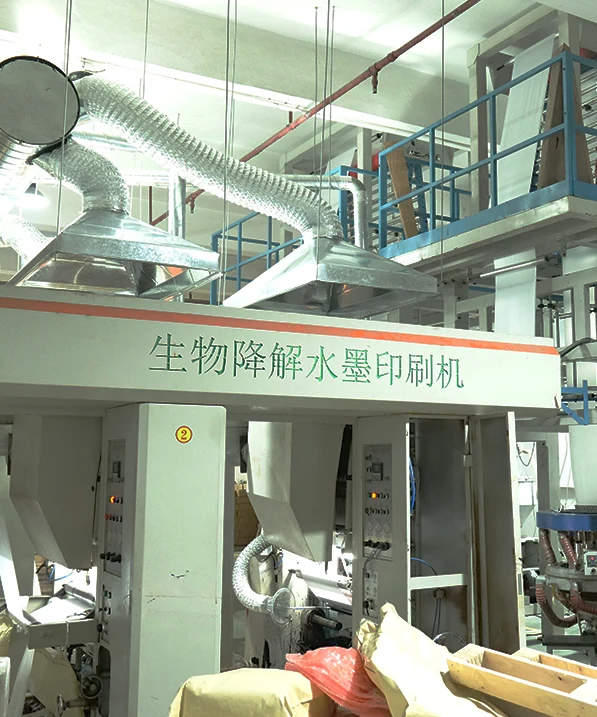
Founded in Shenzhen in 2010, JXD develops and supplies sustainable packaging bags for custom B2B projects. For hardware glassine bags, the team first reviews the packed component and required performance, then confirms the paper, structure, artwork, sample route and acceptance criteria.
The exact production route depends on the approved construction. Buyers can request a factory visit, a process explanation, a pre-production sample and an order-level inspection plan before bulk production begins.
REQUEST A TECHNICAL REVIEW
Share a photo, dimensions, weight, quantity per bag, target order quantity and any storage or compliance requirements.
info@jxdeco-packaging.com +86-180-2549-7165 4th Floor, Building A Pengkai Industrial Park, Guangming District, Shenzhen City, ChinaRELATED PAPER PACKAGING
Custom LED strip packaging bags in semi-translucent wood-pulp fiber, sized to your coil. Printed branding, 5,000-bag MOQ and a typical 3–4 week lead time.
Explore paper bags →
Custom frosted CPE cushion bags with vent holes, a 63-micron reference thickness, printed branding and GRS-documented recycled-content options. Request a sample.
Explore paper bags →
Our recyclable self-sealing bags are made from post-consumer recycled (PCR) plastic and are suitable for the inner packaging of mobile phones, phone cases, chargers, data cables, and other electronic accessories.
Explore paper bags →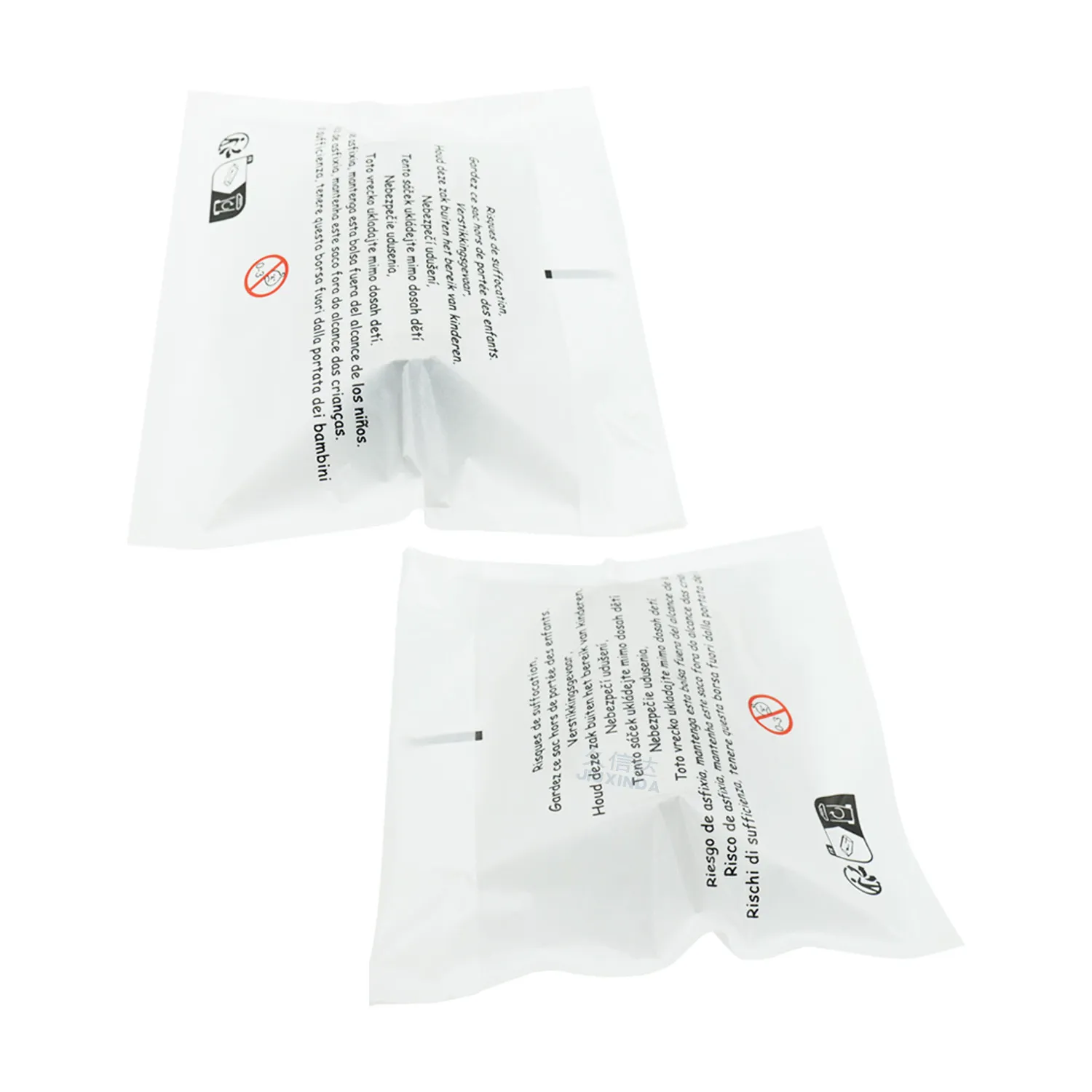
Custom industrial glassine paper bags for hardware and precision metal parts packaging. Lint-free, high tensile & puncture resistant, dustproof, oil-proof and moisture-proof to prevent metal scratch, rust and contamination. Support custom size, structure and industrial logo/model printing. Assembly line compatible,...
Explore paper bags →