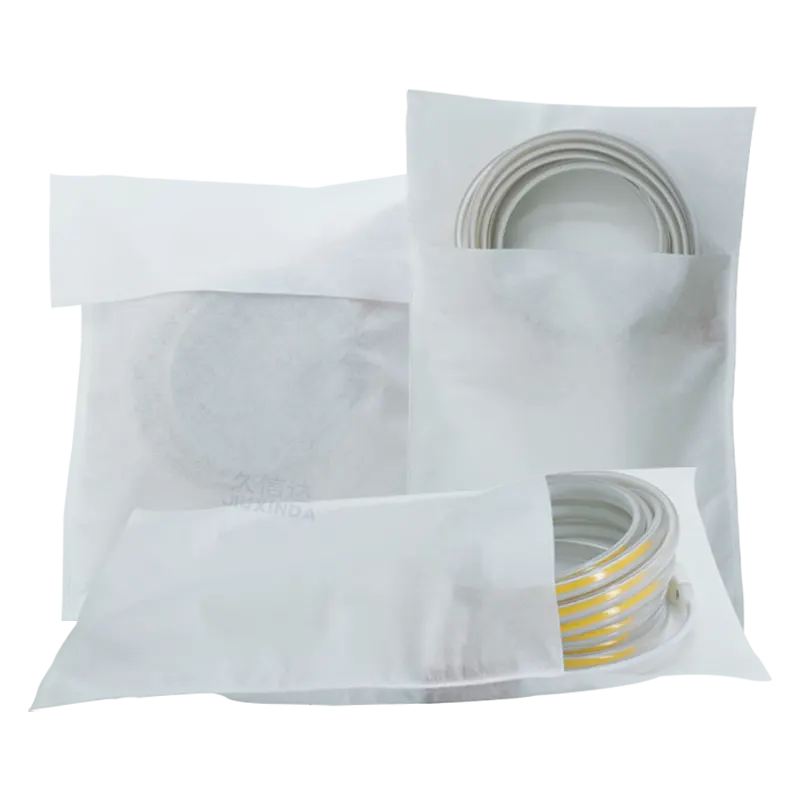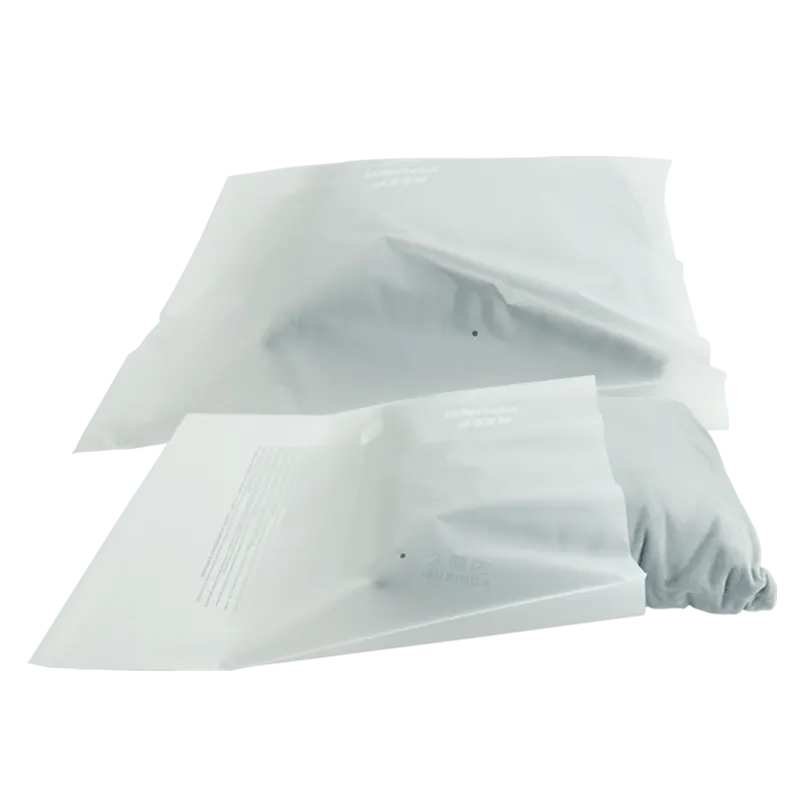
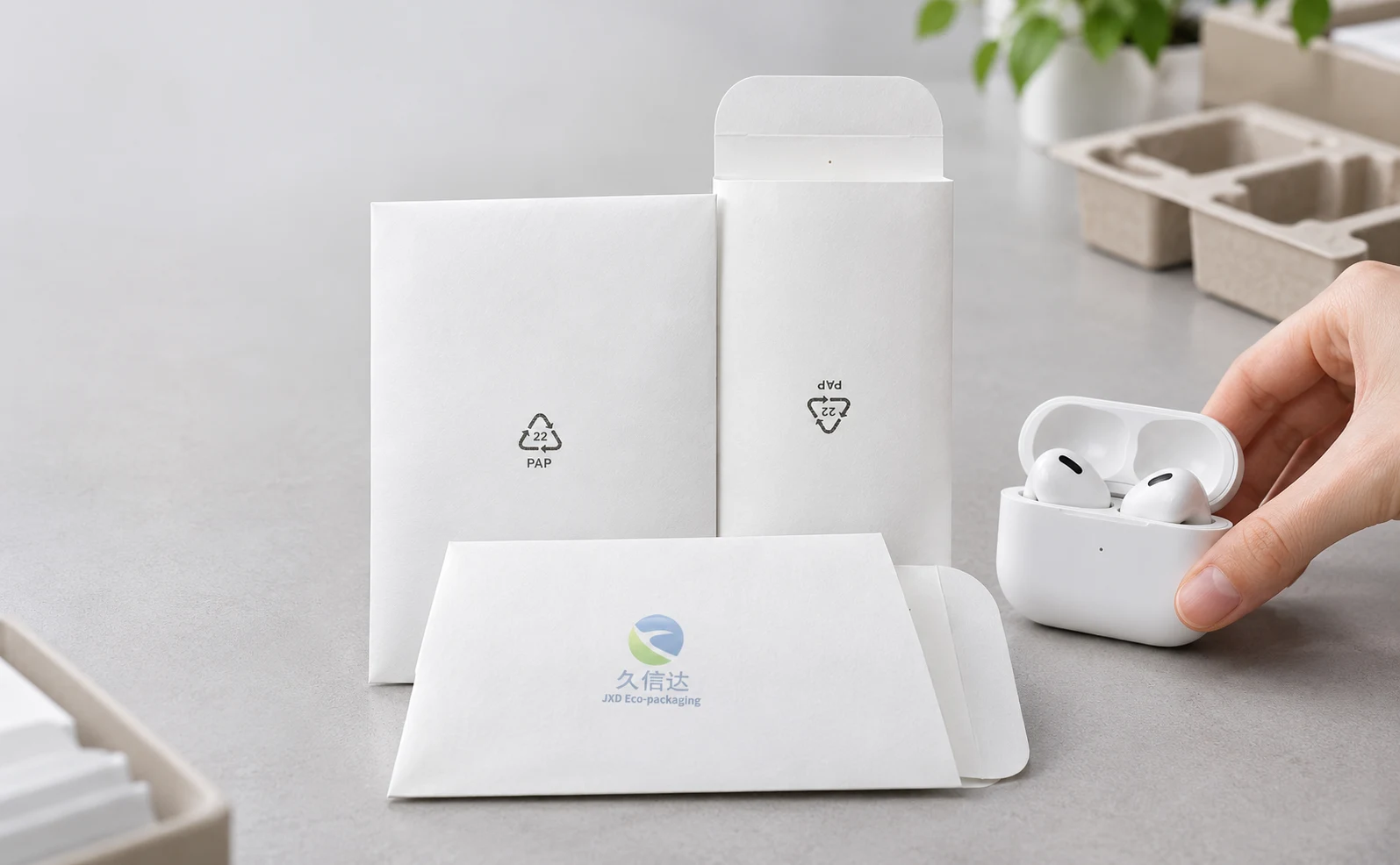
Electronics brands now have to check packaging claims as carefully as they check product protection. The EU Packaging and Packaging Waste Regulation (PPWR) began applying in phases on 12 August 2026, while customers increasingly expect less wasteful packaging. A bag with the wrong certification can create a claims problem; a bag with the wrong seal or thickness can lead to scuffed goods and returns. If you are comparing biodegradable bags for electronics, use these seven checks before approving a material, artwork or purchase order.
1. Define Your Claim First: Compostable, Biodegradable or Recyclable?
These words answer different questions. Biodegradable describes breakdown under stated conditions and time, but says little on its own about disposal. Compostable is a narrower claim tied to a defined industrial or home-composting standard and evidence for the finished bag. Recyclable means the pack is suitable for an available collection and recycling route in the destination market; it does not mean biodegradable. Even a certified industrially compostable bag may not be accepted by a local organics collector, so check the destination's actual disposal route.
For a product range, one material need not do every job. A qualifying compostable inner bag might protect an accessory inside a carton, while a separately specified recycled or recyclable mailer handles shipping. JXD Eco-packaging's paper and fiber sleeves, recyclable PE bags and certified compostable-film options are different product routes. Do not apply a compostability logo to a paper, fiber or PE bag merely because another product holds that certificate. For the fuller terminology comparison, see the biodegradable versus compostable packaging guide.
2. Match the Bag Type to Your Product
Start with the packed item, not the stock bag size. The table is a shortlist for sampling, not a promise that every suggested structure is available in a certified compostable formulation.
| Product | Bag format to test | What it solves | Check before specifying compostability |
|---|---|---|---|
| Earbuds and TWS earphones | Small self-seal or zipper bag; paper sleeve if visibility is unnecessary | Dust control and a compact retail fit | Film, adhesive or zipper must be included in the finished-bag evidence |
| Chargers and cables | Flat self-seal bag | Fast packing and possible size sharing across related SKUs | Check plug edges, cable ends and seal strength |
| Smartwatches | Frosted or clear zipper bag with separate surface protection | Reopening for inspection and visible identification | Bag alone may not prevent screen scratches; check zipper scope |
| Accessory bundles and kits | Larger zipper or gusseted bag | Room for multiple parts and inserts | Test filled weight, gusset, seams and closure |
JXD can review custom shapes and a multi-size project against the product drawing. A bag for an earbud case does not automatically fit a charger merely because their face dimensions are close. For sensitive finishes, test the actual item, tray and inserts together.
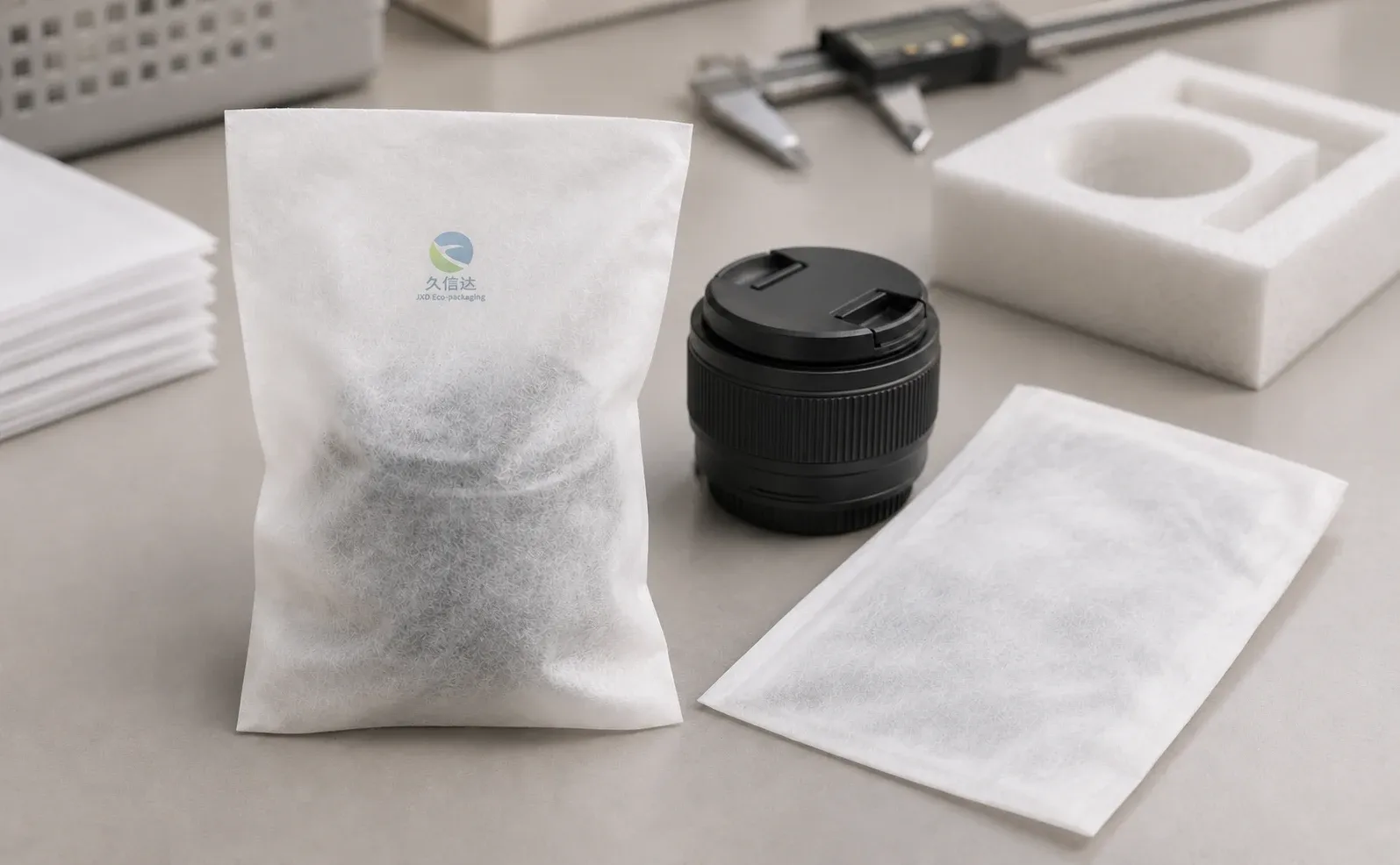
3. Get Size and Thickness Right for Small, Multi-SKU Products
Measure the product after adding its insert, cable tie or protective wrap. As a first sample allowance, try 10–20 mm beyond the measured width and 20–30 mm beyond the length, then adjust for depth, loading direction, flap overlap and sealing space. A rigid earbud case or charger may need a gusset; a nominally wide flat bag can still be difficult to fill.
Grouping similar SKUs under one bag size can reduce tooling and minimum-order pressure, but only if the smallest item does not slide excessively and the largest fits without stretching the seal. Metal plugs and hard corners are reasons to test a thicker film or a different insert, not reasons to select a gauge from a chart alone. Film thickness is usually quoted in microns: 1 micron (µm) = 0.001 mm; 1 mil = 25.4 µm. JXD's PE bag sizing guide explains the measuring method; revalidate the fit and gauge when switching to a compostable material.
4. Verify Protection Performance, Not Just the Eco Claim
Request a sample in the proposed material, size and closure. Pack the real item and check seal peel strength, tear resistance, puncture from plugs or corners, and the effect of the expected temperature and humidity. If the pack must resist moisture, ask for a measured barrier result and test it inside the full shipping carton. Neither a biodegradable label nor a thicker-looking film proves adequate moisture protection.
Ask JXD Eco-packaging which order-specific thickness, tensile and seal checks its factory can provide, and request the results against agreed acceptance criteria. If your component needs electrostatic-discharge (ESD) protection, state that before sampling. Anti-static performance for a compostable-film construction requires a separate technical and certification assessment; it is not included by default.
5. Check Printing Compatibility and Labeling
Artwork is part of the finished pack. Confirm the logo position, color tolerance, barcode readability, multilingual warnings and any market-specific disposal instructions on a printed proof. A water-based or otherwise lower-impact ink is not, by itself, evidence that the printed bag remains compostable. Ink chemistry, print coverage, adhesive, zipper and finished gauge must be checked against the relevant certificate or test scope.
JXD Eco-packaging can review print-material compatibility and color consistency for a proposed design. The composting or recycling symbol on the bag must match the actual product and permitted claim. Do not print a certification body’s mark without the required authorization.
6. Review Certifications for Your Destination Market
Ask for the actual certificate or test report, its holder, validity date and covered products. A resin certificate is useful background, but it does not automatically cover the printed, sealed bag you intend to buy.
| Market | Documents to request for a compostable claim | Important distinction |
|---|---|---|
| EU | EN 13432 assessment and, where claimed, a third-party industrial-composting certificate such as TÜV OK compost INDUSTRIAL; PPWR-relevant technical documentation | PPWR is not a single certificate, and it does not require every electronics bag to be compostable |
| US | ASTM D6400-based evidence and a BPI listing if BPI certification is claimed | FTC Green Guides require substantiated, appropriately qualified environmental claims |
| Australia | AS 4736 industrial-compostability documentation when required by the buyer or claim | Check the actual product listing; home composting is a separate claim |
| New Zealand | The compostability scheme or standard specified by the buyer and local channel | Do not assume an Australian certificate alone settles every NZ claim |
For EU sales, REACH information may be relevant to substances in the packaging article. RoHS concerns electrical and electronic equipment; it is not a routine certification requirement for an ordinary empty bag. JXD displays portfolio-level EN 13432-related, TÜV, BPI, AS 4736, GRS, FSC, ISO 9001 and BSCI materials. GRS concerns eligible recycled-content supply chains, FSC eligible forest-based sourcing, and BSCI a social-audit program. None of these substitutes for a certificate matching the selected bag. Ask which documents JXD can provide for your exact SKU and target market.
7. Plan Orders Around Shelf Life and Sampling
Compostable materials can change in storage, but there is no universal 12-month shelf life for every film, adhesive and printed construction. If you need 12 months of warehouse storage, ask for a written shelf-life statement and supporting stability data under your temperature, humidity and light conditions. Keep unopened stock cool, dry and out of direct sunlight, and rotate it first-in, first-out according to the supplier's instructions.
JXD Eco-packaging's starting MOQ for custom bags is 1,000 pieces, subject to the selected material, structure and print specification. Available material or existing-size samples may be arranged in 1–2 business days; a new tool, printed proof or certified construction can take longer. Plan on an indicative 3–4 weeks for bulk production after artwork and sample approval, and confirm both dates in the quotation. Reserve capacity earlier for peak-season launches rather than ordering a large volume before shelf-life and fit have been tested.
Supplier Checklist: Eight Items to Sign Off
The environmental certificate or report can be verified and is current.
Its scope covers the finished bag, including print, closure, material and thickness.
Samples are tested with the real product and shipping configuration.
Ink and any environmental marks are approved for the chosen construction.
The supplier provides the material, component and market documents your compliance team needs.
Storage conditions and the usable shelf life are stated in writing.
MOQ and any tooling or print-setup charges appear on the quotation.
Sample and bulk lead times are confirmed in writing.
The useful choice is the bag that protects the item and supports the claim you plan to make. Send JXD your product dimensions, packed weight, target market, artwork and expected storage period. We can recommend a bag structure and prepare the appropriate sample for review.
BUYER QUESTIONS
Questions before requesting a quotation
Are compostable bags strong enough for electronics accessories?
They can be suitable for some accessories if the film, thickness, closure and outer pack are tested together. Test plugs and hard edges for puncture, then check the filled bag in its shipping carton.
Can I get anti-static compostable bags?
Treat ESD protection as a separate requirement. Send the ESD performance target before sampling so the film and any additive can be assessed. JXD should confirm technical feasibility and certification scope for the proposed construction; anti-static performance is not assumed.
What certifications do I need for the EU versus the US?
For an EU industrial-composting claim, examine EN 13432-related evidence and the relevant third-party certificate, plus applicable PPWR documentation. For a US claim, check ASTM D6400-based evidence, the BPI listing if that mark is used, and FTC Green Guides wording. Requirements depend on the exact bag and sales channel.
Can one bag size cover multiple SKUs?
Often, if the largest SKU fits without stressing the seal and the smallest does not move enough to scuff. Test both ends of the size range with their inserts before consolidating.
Will compostable bags degrade in my warehouse?
Not necessarily during normal storage, but properties can change with heat, humidity, sunlight and time. Do not assume a standard 12-month life. Request the supplier's storage instructions and validation for your planned holding period.
What is the MOQ and sampling time for custom printed bags?
JXD starts custom projects from 1,000 pieces. Existing material or size samples may be available in 1–2 business days; custom printing and new structures need a project-specific schedule. Confirm MOQ, sample type and production lead time in the written quote.