What Are the Main Eco-Friendly Packaging Bag Materials, and How Do You Choose for Your Product?
Start with the product, not the material label. A garment bag may need clear visibility for color and size checks. An electronics accessory bag may need closer attention to scuffing and fit. Recyclable PE, recycled PE, PLA+PBAT, cellulose-fiber material and paper offer different levels of clarity, moisture protection and sealing performance. Their end-of-life claims also depend on the finished bag and the destination market.
How do the main materials compare?
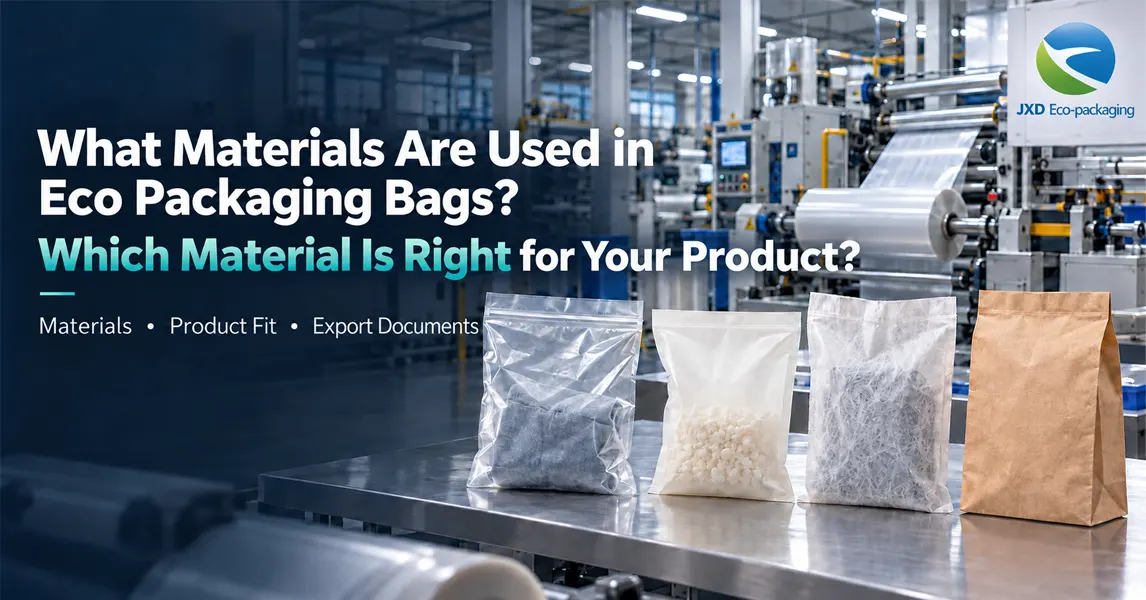
Recyclable PE is a polyethylene-film option for products that need clear visibility, some moisture protection and a heat-sealed or resealable closure. It can be made into flat, adhesive-flap or zipper bags. Whether the finished bag is recyclable depends on its full construction and the collection options in the destination market.
Recycled PE uses recovered feedstock in a familiar PE-bag format. Buyers should check the specified recycled content and test a sample for clarity, color and seal performance. Sourcing records and any claim documentation should match the order being supplied.
PLA+PBAT blends are used to develop compostable film bags. The formulation alone does not establish a claim for the finished bag. Thickness, inks, adhesives and seals all matter when checking the stated composting conditions.
Cellulose-fiber bags, often made from wood-pulp-based materials, offer a softer feel and a lightly translucent appearance. Confirm the fiber source and any coating or added component before deciding how the finished bag should be described and disposed of.
Paper options include kraft and glassine bags. They can work well when full transparency is unnecessary, with plenty of room for printing and folding. Load, moisture exposure, lamination and windows still need to be checked against the actual product.
| Material | Where it works well | What buyers should check |
|---|---|---|
| Recyclable PE | Clear or frosted inner bags for apparel, personal care products and non-sensitive accessories | The full bag structure and local collection system affect recyclability |
| Recycled PE | Apparel and e-commerce bags where recycled content is part of the purchasing brief | Recycled content, traceability, color, odor, strength and batch consistency |
| PLA+PBAT | Bags developed for a defined compostable-packaging program | Certification for the finished bag, including inks and seals, and the composting route available in the destination market |
| Cellulose-fiber material | Soft, lightly translucent bags for clothing, accessories and gifts | Fiber sourcing, coatings, adhesives, load strength and the basis for any end-of-life claim |
| Paper | Retail bags or sleeves that do not need clear product visibility | Moisture exposure, tear strength, coatings and window construction |
Material choice does not settle the bag format. Flat bags can work with external cartons or sealing equipment. Self-adhesive bags help apparel teams sort and reseal items. Zipper bags suit products that are opened repeatedly. Once the format is chosen, test thickness, opening direction, seal strength and packing speed with the actual product.
Which Packaging fits your product?
| Product category | Main questions | Starting options |
|---|---|---|
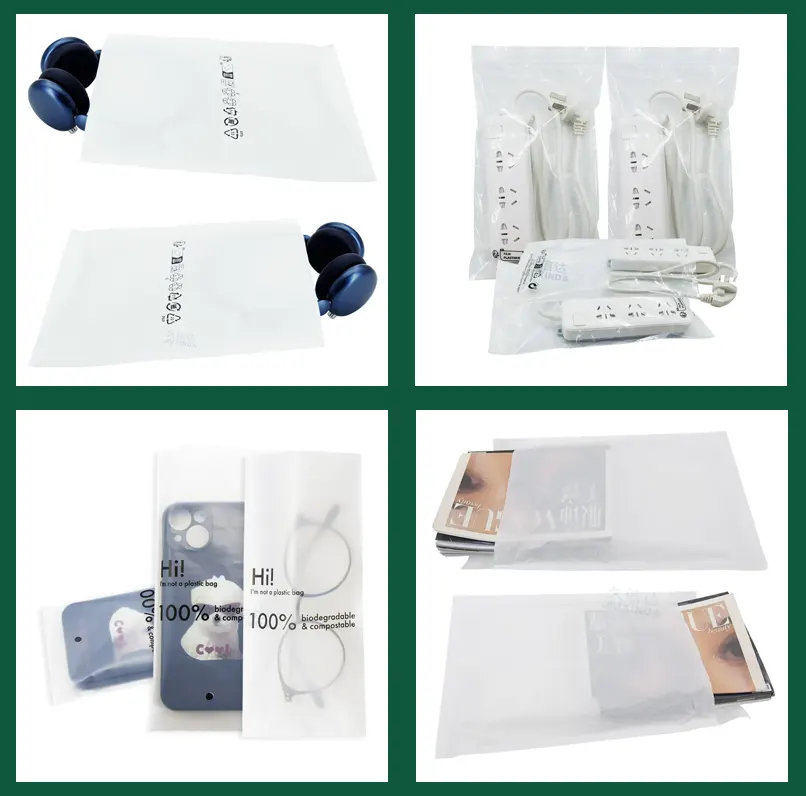
| Apparel and textiles | Does the buyer need to see color and size? How will items be folded and labeled? | Clear PE self-adhesive bags for visibility; recycled PE where specified; cellulose-fiber samples for a softer presentation |
| Electronics accessories | Could the bag scuff the finish? Must it be reopened? | Sample PE flat or zipper bags. ESD-sensitive items need separately specified and verified protective packaging |
| Cosmetics and personal care | Could a cap or edge rub against the bag? Is leakage possible? | Compare PE or paper outer bags by product shape. Direct-contact packaging requires a separate material review |
| Hardware and small parts | Are items heavy, sharp or likely to spill? | Test puncture resistance and seals; consider a liner or divider where needed |
| Gifts and branded items | Should the customer see the item? How much does print quality matter? | Compare cellulose-fiber, paper and frosted PE samples |
These are sampling directions. A filled-bag trial and transport check should settle the final choice, especially for sharp parts, liquids and circuit boards.
Which documents matter for export packaging?
There is no universal environmental certificate for every material and destination. For PE, review the formulation and finished-bag construction. If a recycled-content claim is planned, request sourcing evidence and records that match the supplied batch. A compostability claim for a PLA+PBAT bag needs evidence covering the finished structure and the stated industrial or home composting conditions. FSC chain-of-custody documentation may be relevant to paper or cellulose-fiber sourcing claims; it does not certify that a bag is biodegradable.
Destination-market rules may also require technical documentation, labeling information or producer-responsibility steps. Confirm the target country, bag use and proposed artwork before sampling, then agree on the document list for that specific order.
How does JXD Eco-packaging support material selection?
JXD Eco-packaging can review the bag format, material, dimensions, thickness, opening, print and sampling requirements against your product and destination market. Send the product size, weight and shape, whether the bag directly contacts the item, packing method, destination country, forecast quantity and artwork. Pack the actual product into the sample and check visibility, scuffing, seals and condition after transport. Before production, agree on the finished specification, tolerances, documentation and inspection criteria.
BUYER QUESTIONS
Questions before requesting a quotation
Are recyclable PE and recycled PE the same thing?
No. One concerns whether a material or finished bag may enter a recycling stream. The other concerns the use of recycled feedstock. Both claims need their own supporting evidence.
Will a PLA+PBAT bag suit every export market?
Not automatically. The answer depends on the buyer's brief, local rules, available collection routes and evidence for the finished bag.
Is cellulose-fiber material better for apparel than PE?
It depends on the packaging task. Clear PE makes color, labels and size easier to inspect. Cellulose-fiber material offers a softer, translucent look. Sampling both with the garment is useful.
Can paper replace every plastic inner bag?
No. Paper behaves differently in moisture, tearing and visibility. Test it against the product and shipping conditions.
What should a buyer send before requesting a sample?
Product dimensions, weight and shape, bag format, clarity and closure requirements, artwork, destination market and proposed environmental claims.