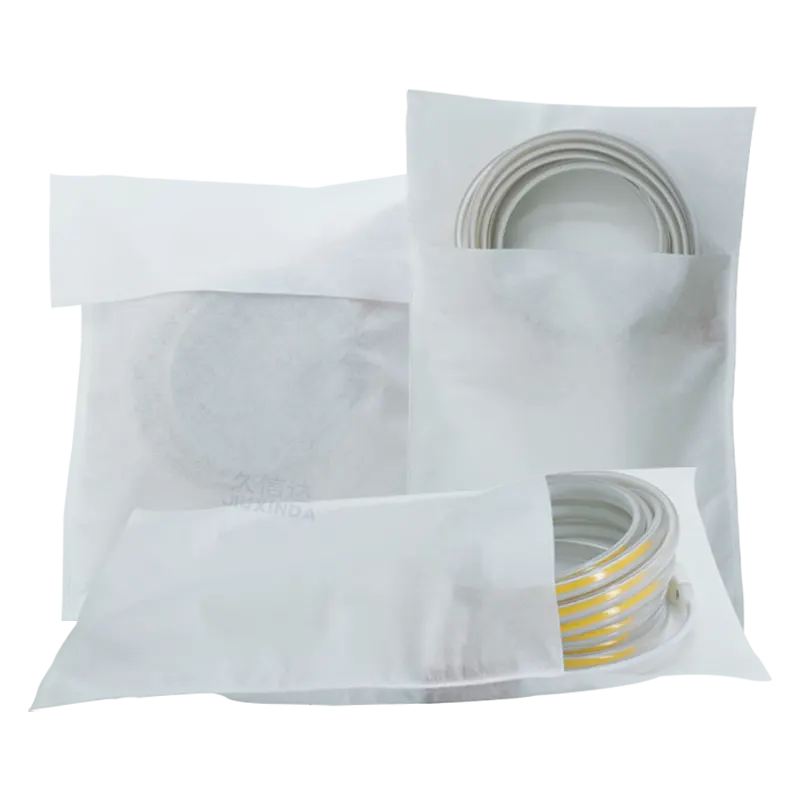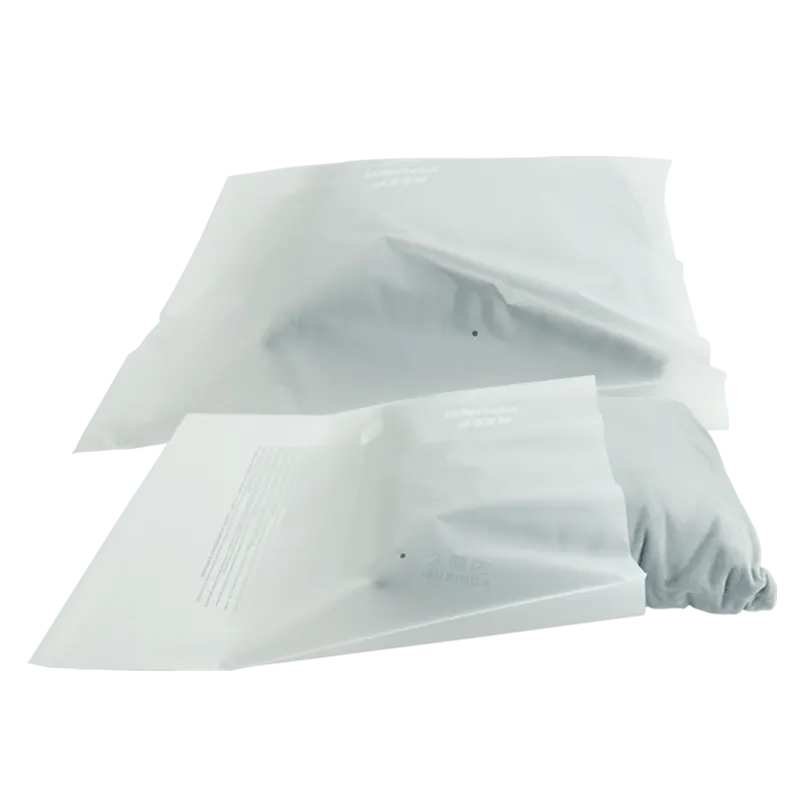
Different digital products need different packaging. Earbuds, computer mice and phone accessories may need surface protection and a refined finish. PCBs, chips and sensors require packaging matched to their electrostatic discharge (ESD) sensitivity. Recycled-material packaging also calls for a review of material information, package design and destination-market documentation.
JXD Eco-packaging provides custom matte, anti-static and recycled-material bags. Start by identifying the product and its protection needs, then confirm the bag format, material, testing requirements and supporting documents.
Which Bag Should You Choose for Different Products?
Use this table as a starting point. Confirm the final specification against the product, packing process and sample results.
| Product | Bag options to consider | Selection points |
|---|---|---|
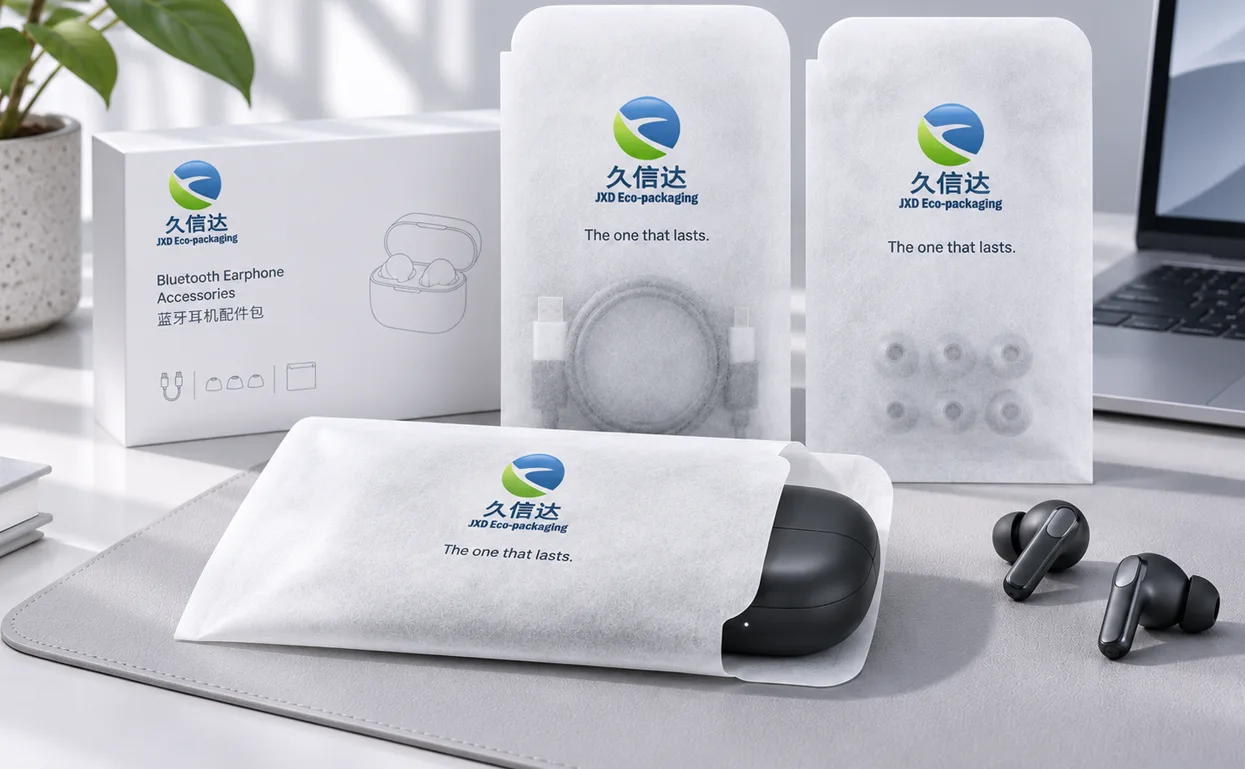
| Bluetooth earphones and accessories | Matte bags or soft-touch paper bags | Check surface feel, fit and scratch protection. Assess additional ESD protection if the product contains sensitive components. |
| Computer mice, keyboards and remote-control housings | Matte bags or soft-touch paper bags | Check surface protection, bag dimensions and whether rubbing leaves marks. |
| Phone cases and cosmetic electronic parts | Matte bags or soft-touch paper bags | Consider scratch protection, presentation, print quality and fit. |
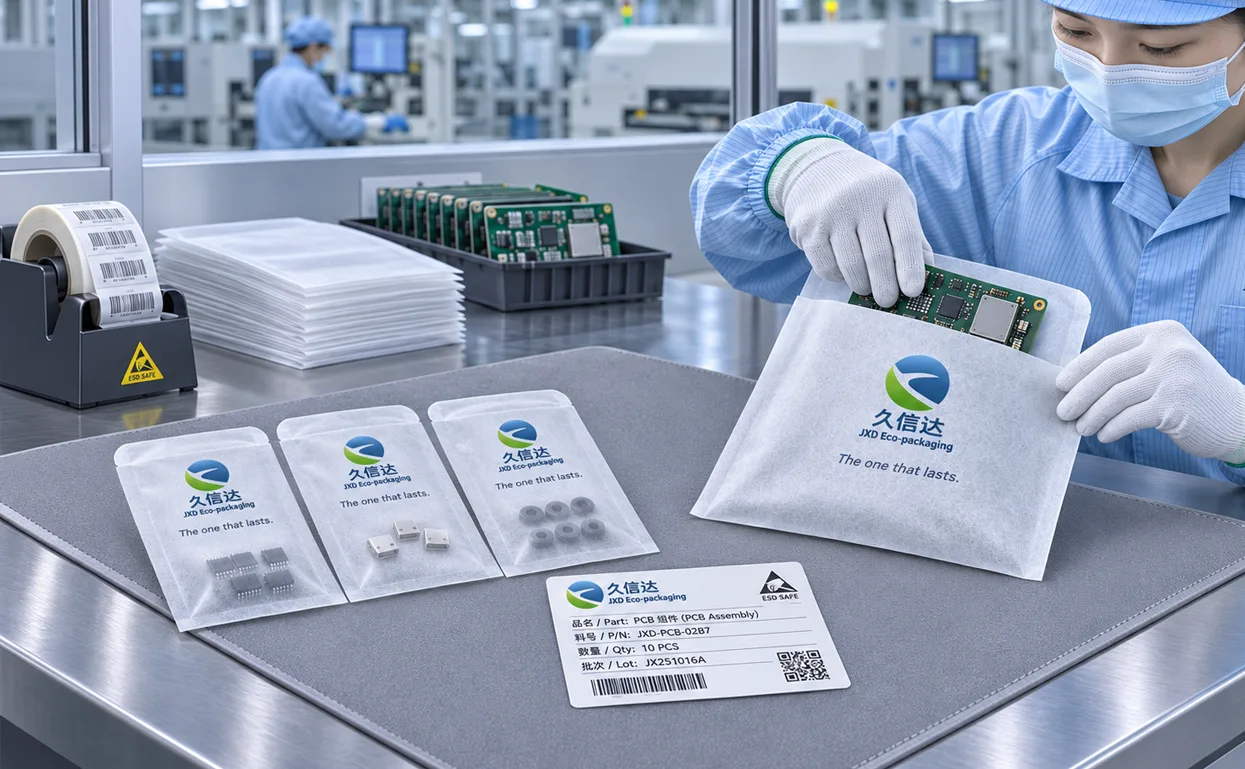
| PCBs, chips, sensors and electronic modules | Anti-static bags; shielding bags when required | Confirm the bag format, performance parameters and test method according to component sensitivity. |
| Chargers, cables and small accessories | PE bags or custom-printed bags; anti-static bags for ESD-sensitive items | Choose according to scratch risk, ESD sensitivity and display requirements. |
| Electronics using recycled packaging | Recycled-material bags, with matte or anti-static features as needed | Confirm recycled content, material structure, recycling marks and destination-market documentation. |
Products in the same category can contain different components and have different ESD requirements. For finished products containing circuit boards, sensors or chips, confirm protection needs with the purchasing, engineering or quality team instead of choosing by product name alone.
http://CommonCommon Packaging Options
Matte and soft-touch bags
Matte or soft-touch paper bags are commonly considered for earbud accessories, computer mice, phone cases and other electronic parts where appearance matters. They can be used as inner packaging and offer a lower-gloss finish than a standard clear bag.
When reviewing samples, check bag dimensions, surface consistency, abrasion or powder transfer, seal strength and print quality. For products that scratch easily, test the actual item inside the bag through normal packing and handling.
Anti-static and shielding bags
PCBs, chips, sensors and electronic modules may require anti-static packaging. Standard anti-static bags and shielding bags have different uses; color and appearance do not establish a bag’s protection level.
When requesting a quote or sample, share the component type, ESD requirements, storage and transport conditions, and whether shielding is needed. The source document mentions 10⁶–10¹¹ Ω as a suggested general surface-resistance range. Confirm the actual target and test method for the specific product rather than applying this range to every electronic component.
Recycled-material bags
When selecting recycled-material packaging, review more than the recycled content percentage. Buyers may also need information on material source, blend, package structure, recyclability and documentation for the destination market. Requirements vary, so a recycled-content label alone does not establish regulatory compliance.
JXD Eco-packaging can discuss recycled content, material structure and marking options for a project, and help customers review related documentation. Whether a package meets a particular market requirement depends on the product, materials, intended use and sales region.
Tests and Specifications to Confirm
Evaluate samples against the actual packing and use conditions:
ESD performance: Confirm surface-resistance parameters and the applicable test method.
Physical performance: Check tensile, puncture, sealing and abrasion performance according to the application.
Surface protection: Inspect the product after packing, unpacking and normal handling for scratches or residue.
Storage and transport: Discuss suitable tests if the product faces long-distance shipping, humidity or temperature changes.
Dimensions and printing: Confirm bag width, length, closure, print details and dimensional tolerances.
Test results apply to the specific material, bag format and test conditions stated. If the formulation, thickness or bag-making process changes, key performance requirements should be reviewed again.
Certificates and Compliance Documentation
JXD Eco-packaging can provide relevant certificates and material documentation upon request. Confirm certificate validity, the certificate holder and scope for each project.
For projects using recycled materials, customers can request confirmation that the Global Recycled Standard (GRS) certificate covers the relevant product or supply chain. If a product has a RoHS test report or other testing documents, confirm which product, material and test scope the report covers. A certificate or report should not be taken to mean that every bag format and formulation has been assessed in the same way.
For EU-bound packaging, JXD Eco-packaging can help organize information on recycled-material sources, material composition and recycling marks, and support a review of PPWR-related requirements. The applicable provisions depend on package structure, materials, intended use and destination market. Confirm the relevant requirements and documents for each product.
Information to Share Before Customization
To discuss a specification and sample plan, prepare:
Product name, dimensions, weight and photos
Whether the product is ESD-sensitive and requires shielding
Scratch protection, surface feel, transparency or appearance needs
Bag format, thickness, closure and print details
Recycled content target and destination-market documentation needs
Order quantity, sample requirements and target lead time
About JXD Eco-packaging
JXD Eco-packaging provides custom packaging bags for digital products and electronic accessories. Material and bag format can be discussed around product size, ESD needs, appearance and recycled-content targets. If a project requires specific testing or regulatory documents, confirm the test scope, document coverage and acceptance criteria during sample development.
Contact JXD Eco-packaging with your product details and packaging requirements to discuss suitable materials, bag formats and samples.
BUYER QUESTIONS
Questions before requesting a quotation
Can a matte bag replace an anti-static bag?
Not based on appearance alone. Matte bags are commonly selected for cosmetic parts. ESD-sensitive components need packaging matched to their protection requirements.
Is a lower surface-resistance value always better?
No. The target should match the component’s ESD requirements and the agreed test method.
Does recycled content automatically mean the package complies with export regulations?
No. Requirements depend on the packaging materials, structure, intended use and destination market, and may require supporting documentation.
What information is needed for a sample?
Share product photos and dimensions, intended use, packing process, ESD requirements, preferred bag format and quantity.