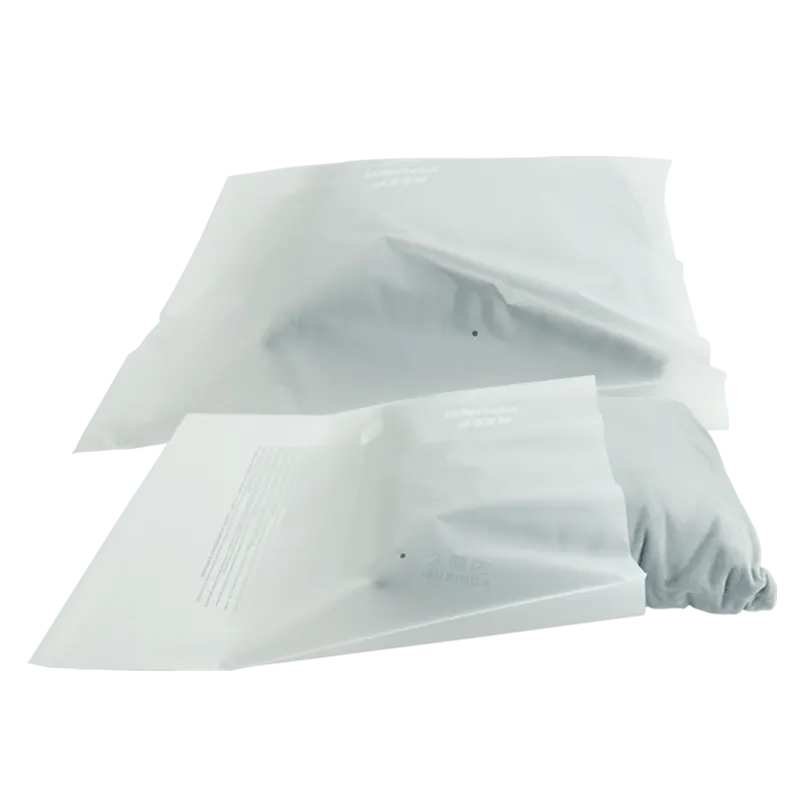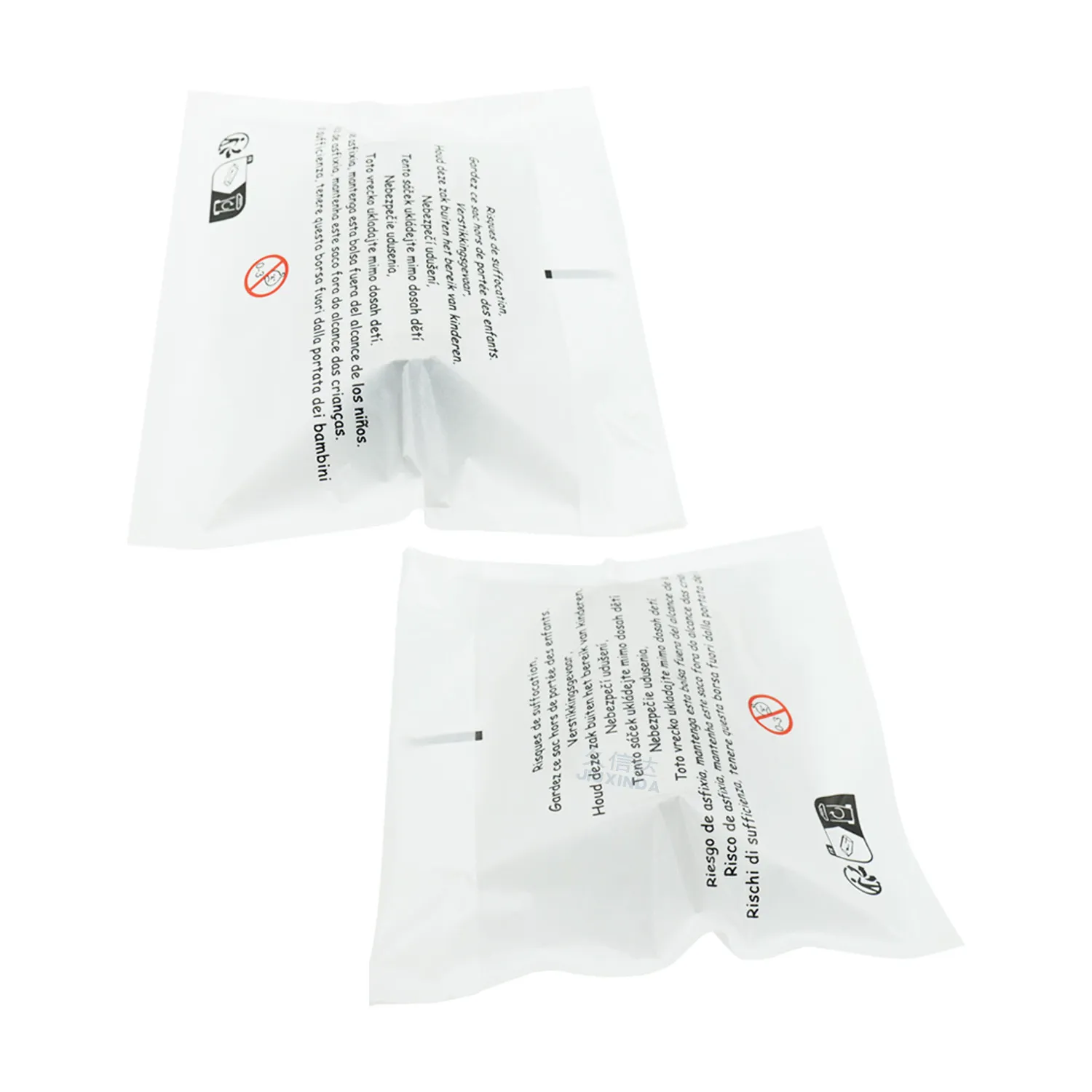
Start with the product and packing process, then choose the bag construction and recycled-content target. JXD Eco-packaging can discuss 35%, 50% and 100% recycled PE for custom bags, subject to material availability and sample approval. A higher percentage uses less virgin PE in an otherwise comparable bag. Performance, local recyclability and export-market compliance still need to be checked separately.
Recyclable, recycled and reusable are different claims
Recycled content describes how much recovered material is used to make a new bag. Recyclable describes whether the finished bag can be collected, sorted and reprocessed after use in the market where it is sold. A recycled PE bag may be recyclable in a suitable system, but the film, closure, adhesive, label and local collection route all matter. The US Environmental Protection Agency distinguishes recycled-content products from recyclable products for this reason.
Reusable means the bag is designed to keep working through repeated use under its intended conditions. Returnable goes further and implies an arrangement for collecting and using the packaging again. A customer opening a bag twice does not establish that it belongs to a return system. The EU Packaging and Packaging Waste Regulation, or PPWR, sets separate requirements for reusable packaging and its use systems. Review the actual format before making that claim in the EU market.
JXD Eco-packaging develops custom recycled PE bags. PE film resists liquid water, although an open mouth, adhesive flap or ordinary heat seal may not make the finished package watertight. Recycled PE remains plastic; adding recycled resin does not make a bag biodegradable. Film, inks and adhesive components can also age in storage, so shelf life should be assessed for the chosen construction rather than described as unlimited.
Which plastic film should you specify?
This guide focuses on recycled PE bags. Buyers may also encounter PP film, PET film and multi-material laminates. Their names tell you what the main material is, not whether a finished bag will be accepted by a particular recycling program.
| Material or construction | Where it may fit | What to verify |
|---|---|---|
| PE film | Flexible flat bags, self-adhesive bags and press-to-close zipper bags for general dust and moisture protection | Required clarity, closure performance and collection options for flexible plastic in the destination market |
| PP film | Some packaging that calls for a stiffer presentation | Folding and sealing performance, tear resistance and the relevant local recycling stream |
| PET film or a laminate | Constructions with specific appearance or performance requirements | Whether layers can be separated and whether the complete structure has a viable recycling route |
Even when the body is PE, a zipper track, adhesive strip, release liner, coating, paper label or large printed area can change how the bag is assessed. Ask for a complete material specification rather than relying on the resin code or recycling arrows printed on the film.
Should you choose 35%, 50% or 100% recycled PE?
These percentages are proposed targets for the recycled content of the PE resin used in the bag body by weight. They do not mean that every component of the finished bag, including a zipper or adhesive, is made from recycled material. Agree on the calculation basis in the purchase specification.
| Target content | Why a buyer might consider it | Sample checks |
|---|---|---|
| 35% | Reduce virgin PE use while evaluating a more consistent display appearance | Clarity, color variation, visible specks or gels, and seal strength |
| 50% | Increase recycled input and review whether a consumer-facing GRS product claim may be possible | Verified composition, documentation, print quality and consistency between batches |
| 100% | Maximize recycled PE use in the bag-body resin, subject to the required appearance and performance | Feedstock consistency, gels, color, seals, tensile behavior and packing trials |
Higher recycled content can bring a higher quote, more haze, wider color variation or more visible gels. It is a possible trade-off, not a fixed rule. Feedstock quality, whether the input is post-consumer or pre-consumer, sorting, formulation, color and processing all affect the result. Compare samples made to the same size and thickness, with the intended product inside. Using less virgin resin is a measurable material choice; a broader environmental claim needs evidence beyond the percentage alone.
GRS has its own thresholds and chain-of-custody rules. Under the Textile Exchange guidance , products with at least 20% qualifying recycled content may be certified for business-to-business use, while consumer-facing GRS product labeling generally requires at least 50% and compliance with the remaining claims rules. A 35% bag should not simply carry a consumer-facing GRS label. A 50% or 100% target does not automatically authorize one either.
Match the bag style to the product
Use the table to narrow the sampling options. Final dimensions, gauge and closure should be approved with the packed product.
| Product or application | Bag styles to assess | Main trial questions |
|---|---|---|
| Shirts and knitwear | Self-adhesive or open-top flat bags | Folded thickness, flap overlap, packing speed and size-label position |
| Bluetooth earbuds and small electronics | Flat or self-adhesive bags | Abrasion at corners; whether separate cushioning or antistatic protection is needed |
| Phones and boxed accessories | Self-adhesive or flat bags | Clarity, fit tolerance and whether insertion scratches the surface |
| Bracelets and small components | Press-to-close zipper or flat bags | Repeated opening, zipper engagement and retention of small parts |
| Retail handover and promotional items | Carrier bags with handles | Handle attachment, bottom-seal strength and performance during repeated carrying |
Beauty tools and personal-care accessories may use similar outer packaging. Direct contact with food or a cosmetic formulation requires a separate review of the applicable contact-material requirements.
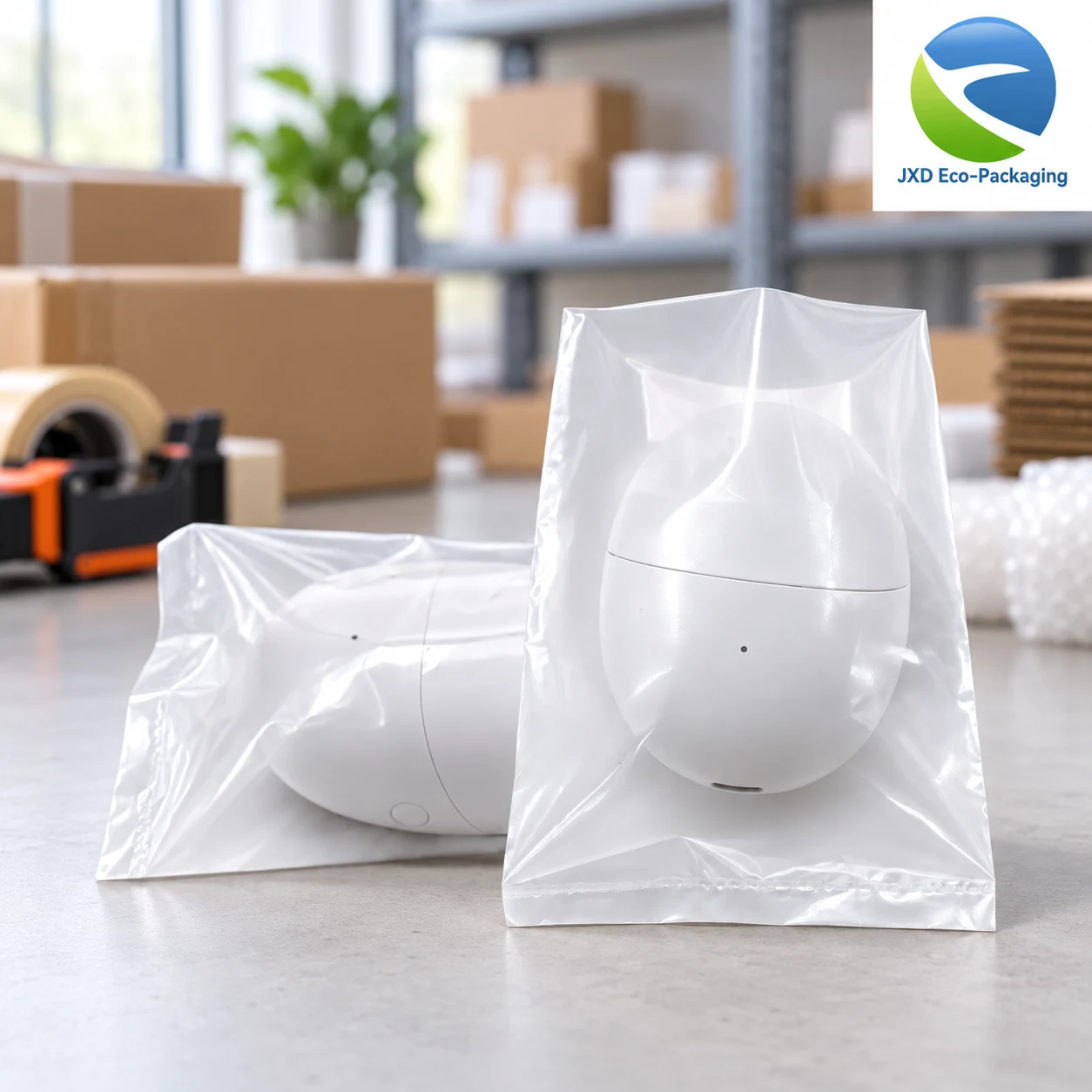
An open-top flat bag offers a simple construction for accessories that will be heat-sealed or placed in an outer carton. The image below shows a semi-translucent bag at an electronics packing station. Its appearance cannot establish the recycled-content percentage of a production order.
Self-adhesive bags support quick packing of folded apparel and small devices. For garments, check the packed thickness and flap overlap. For phones and accessories, check for sharp edges and surface abrasion. Decide whether the adhesive is intended for one-time sealing or repeated opening, then test it on a filled sample.
Press-to-close zipper bags work where the contents are taken out and put back. Check the track material, opening feel and edge seals together. Handle bags for retail handover need a different test, particularly at the handle attachment. Size, gauge, clarity, print and closure can be discussed for each style, then confirmed by sampling.
Design details that can change a recyclability claim
The film is only part of the package. A self-adhesive bag also has an adhesive and release liner. A zipper bag has a closure track. A handle bag may need reinforcement. Paper labels, coatings, incompatible layers and extensive printing may affect sorting or processing. Review the complete structure and the disposal instructions proposed for the destination market.
Collection varies by location. In the United States, for example, the EPA advises that plastic bags and films generally do not belong in household curbside recycling bins; some retail collection points accept them separately. A blanket “recyclable everywhere” claim would therefore be misleading. For EU orders, review the PPWR requirements applicable to the finished package, recycled content and technical documentation. GRS certification does not replace that assessment.
How JXD Eco-packaging develops a custom bag
Send JXD Eco-packaging a product sample or its length, width, packed thickness and weight, along with the packing method, destination market, expected quantity and target recycled content. We can then review the bag style, material, print and closure before preparing a sample. The customer should test it with the real product, including packing speed, acceptable haze and gels, color variation, seam strength, opening feel and fit in the shipping carton. Once the sample is approved, dimensions and tolerances, appearance, artwork, recycled-content target and inspection criteria should be recorded in the order specification. Flag any antistatic or special contact requirements before sampling.
For an order that will be sold with a GRS claim, check that a current scope certificate covers the correct legal entity, process and product. Confirm the transaction certificate or other applicable verified transaction record for the shipment, including the recorded content percentage. [Textile Exchange explains the role of scope and transaction certificates. JXD Eco-packaging describes GRS-supported recycled PE products on its English product pages certificate validity, product scope and shipment documents still need to be checked for the particular order.
What to include in your RFQ
Product dimensions, packed thickness and weight, including any sharp corners.
Bag style, finished dimensions, film gauge, clarity, closure and expected number of openings.
Target recycled-content percentage and whether the input must be post-consumer recycled (PCR) or another qualified recycled source.
Artwork, color requirements, barcode or size-label location, destination country and proposed environmental wording.
Estimated quantity, delivery location, approved sample and required supporting documents.
Request material specifications and composition records for the order. If you plan to make a GRS product claim, agree in advance which scope and transaction documents will be available and who will obtain them. Assess claims such as recyclable, recycled content and reusable separately. One certificate does not establish every property of every bag style or shipment.
BUYER QUESTIONS