Why Prioritize Direct Purchasing from Manufacturers
Against the backdrop of increasingly stringent environmental policies and rising corporate compliance requirements, biodegradable plastic bags have become a critical necessity. For procurement professionals, the focus is no longer merely on “being able to buy,” but on “buying the right products, buying with confidence, and getting value for money.” While purchasing through distributors may reduce some communication costs, it often comes with issues such as price markups, lack of transparency, and unclear accountability for quality. In contrast, dealing directly with manufacturers significantly reduces intermediary costs, provides a clearer pricing structure, and allows procurement teams to directly verify the source of raw materials, formulation ratios, and production processes. This transparency enables procurement to conduct technical assessments and identify risks early on, thereby improving decision-making quality from the outset. Furthermore, in scenarios involving demand adjustments or urgent reorders, direct communication with manufacturers shortens the chain of communication, accelerates response times, and enhances overall supply chain efficiency.

Core Advantages and Value of Direct Sourcing from Manufacturers
From a practical implementation perspective, the advantages of direct manufacturer sourcing are reflected in comprehensive improvements in cost, quality, and collaborative efficiency. Factories with large-scale production capabilities typically possess automated equipment and stable raw material supply systems, giving them a competitive edge in unit cost control, making them particularly suitable for stable medium- to long-term procurement needs. At the same time, manufacturers’ internal quality management systems are relatively well-established, with standardized processes spanning raw material inspection, production process control, and finished product testing. This ensures higher product consistency and reduces the risk of batch-to-batch variability. More importantly, manufacturers generally possess stronger customization capabilities. Whether it concerns dimensions, thickness, load-bearing capacity, or printing content and packaging methods, adjustments can be made flexibly according to procurement requirements. On the collaboration front, establishing long-term contractual relationships can also secure higher production priority and price stability, thereby ensuring supply security amid market fluctuations.

How to Select the Right Biodegradable Plastic Bag Manufacturer
When screening manufacturers, procurement teams should avoid a sole focus on price and instead establish a multi-dimensional evaluation system. First, verify basic qualifications and production capacity to ensure the manufacturer holds valid production licenses and has sufficient capacity to fulfill orders. Second, prioritize assessing raw material and formulation capabilities; since different application scenarios demand varying product performance, the manufacturer’s ability to adjust material ratios is critical. In practice, sample testing is an essential step. By verifying thickness uniformity, load-bearing capacity, and user experience, one can intuitively assess product quality. Additionally, attention must be paid to the manufacturer’s delivery capabilities and service responsiveness, including delivery schedule reliability, mechanisms for handling exceptions, and support for customized production. From a business perspective, reasonable minimum order quantities and payment terms directly impact procurement flexibility and working capital requirements, necessitating a comprehensive evaluation.
Certification Systems Are a Key Threshold in Procurement Decisions
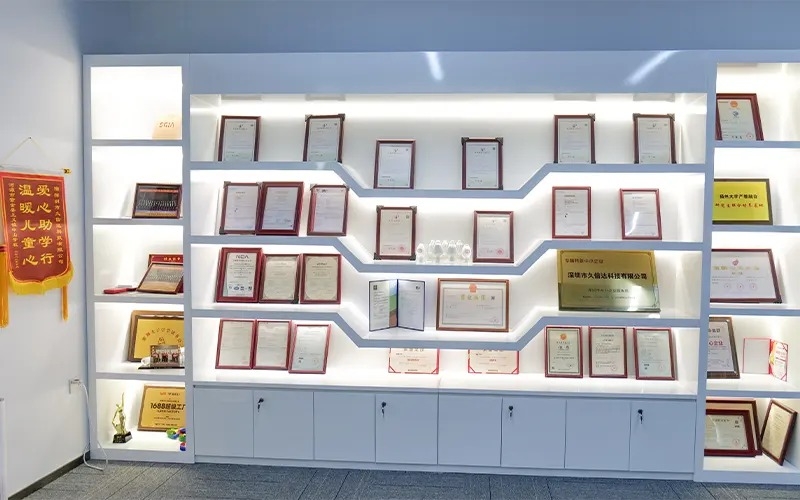
“Biodegradable” is not a simple concept but one that must be verified through authoritative standards. During the procurement process, it is essential to verify whether the product meets relevant certification requirements. Common domestic standards include GB/T 38082, while international standards include EN 13432 and ASTM D6400, among others. These standards typically establish strict criteria regarding degradation rates, composting cycles, and environmental safety. Additionally, certain international certification marks can serve as supplementary criteria for evaluation. In practice, procurement teams should require manufacturers to provide complete certification documentation and verify its authenticity through official channels to avoid compliance risks arising from fraudulent certifications. Particularly when dealing with export business, certification requirements vary across different markets; confirming standard compatibility in advance is a crucial prerequisite for ensuring the smooth execution of orders.
The Shift from Procurement to Supply Chain Optimization
Overall, sourcing biodegradable plastic bags directly from manufacturers is not only a means of cost optimization but also a key manifestation of the evolution of the procurement function toward supply chain management. By establishing stable partnerships with manufacturers, companies can build long-term advantages in cost control, consistent quality, and delivery reliability. For procurement professionals, the key lies in applying a specialized perspective to supplier selection and management, extending cooperation from one-off transactions to sustained collaboration. Only in this way can the procurement goal of being “peace of mind, cost-effective, and reliable” be achieved in an environment where environmental requirements coexist with market fluctuations.
BUYER QUESTIONS