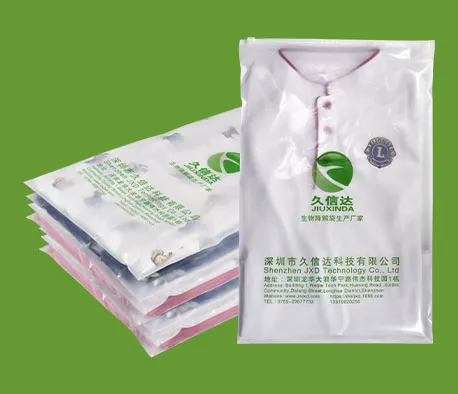
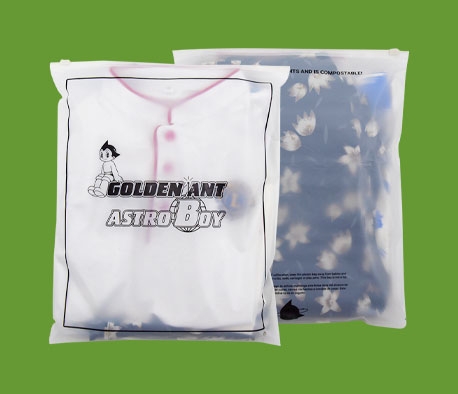
With the global push toward carbon neutrality and tightening plastic restrictions worldwide, green transformation in the apparel industry has become inevitable. Biodegradable packaging bags—thanks to their eco-friendly attributes and practical value—have emerged as the preferred alternative to traditional plastic bags for apparel brands. Shenzhen Jiuxinda Technology Co., Ltd., with 16 years of expertise in sustainable packaging, has provided customized biodegradable packaging solutions to numerous apparel brands. Below, we break down key customization considerations across core dimensions to help brands efficiently implement environmentally friendly packaging upgrades.
Core Reasons Behind Apparel Brands’ Shift to Biodegradable Packaging Bags
Apparel brands are turning to biodegradable packaging not only to comply with regulatory requirements but also to enhance brand image and gain a competitive edge. On the policy front, China’s “plastic restriction order” explicitly bans the circulation of non-biodegradable plastic bags, while the EU’s Single-Use Plastics Directive and U.S. environmental regulations impose biodegradability requirements on imported packaging—non-compliant products risk being excluded from markets.
From a branding perspective, eco-friendly packaging is a crucial tool for building a sustainable image, aligning with the green consumption preferences of mainstream audiences such as Generation Z, thereby significantly boosting brand premium and customer goodwill. Practically speaking, high-quality biodegradable bags offer strong durability, dust resistance, and moisture protection, making them a complete replacement for conventional PE bags. After disposal, they fully decompose into carbon dioxide and water under composting conditions, leaving no white pollution behind, thus achieving a closed-loop lifecycle for packaging. Multiple apparel brands served by Shenzhen Jiuxinda Technology Co., Ltd. report that switching to biodegradable packaging improved their environmental reputation by 40% and significantly increased cross-border order approval rates.
Key Application Scenarios for Biodegradable Packaging in the Apparel Industry
Biodegradable packaging meets the full supply chain needs of the apparel industry, covering production, warehousing, logistics, and retail, and is suitable for various subcategories of clothing.
Fast Fashion & Casual Wear: Lightweight garments such as T-shirts, shirts, and hoodies often use small self-adhesive biodegradable bags—lightweight and easy to pack, ideal for e-commerce shipments of small items.
Sportswear: Athletic wear, yoga clothes, and sports shoes require high-tensile-strength biodegradable bags that resist tearing and puncturing, suitable for rough handling during express delivery.
Premium Apparel: Valuable garments like suits, coats, and wedding dresses benefit from thickened biodegradable zip-lock bags that provide excellent moisture, dust, and wrinkle protection, combining robustness with a premium feel.
Children's & Underwear: Infant clothing and intimate apparel should prioritize food-grade biodegradable materials—non-toxic and odor-free—to meet safety standards for direct skin contact.
Cross-border E-commerce Apparel: Clothing exported to Europe, America, and Southeast Asia requires internationally certified biodegradable packaging to meet local environmental compliance standards and avoid customs delays.
Key Parameters for Apparel Biodegradable Packaging: Size, Thickness, and Material
1.Size Specifications (Standard Customization Reference)
Biodegradable packaging sizes are standardized according to garment categories, though custom adjustments are available:
Small (17×30 cm): Suitable for socks, accessories, and children’s small items.
Medium (28×42 cm): Ideal for T-shirts, shirts, and standard tops.
Large (38×55 cm): Fits hoodies, long pants, and outerwear.
Extra Large (50×70 cm): Designed for down jackets, coats, and dresses.
Custom Sizes: Shenzhen Jiuxinda Technology Co., Ltd. supports custom sizing from 10 to 100 cm, accommodating unique garment shapes and packaging needs.
2.Thickness Selection (Matched to Load Capacity and Use Case)
Thickness is commonly measured in "mils" (1 mil = 0.01 mm). The national minimum standard is 2.5 mils, with different thicknesses suited to specific applications:
Lightweight (3–4 mils): Ideal for summer wear and children’s clothing, supporting up to 2 kg; offers high cost-effectiveness.
Standard (5–6 mils): Suitable for hoodies and long pants, supporting 5–8 kg loads with excellent tear resistance. Thickened Version (7–9 deniers): Suitable for outerwear and down jackets, with a load capacity of 10–15 kg, ideal for cross-border logistics.
Premium Version (10–12 deniers): Designed for suits and wedding gowns, offering high strength, wear resistance, and anti-wrinkle properties.
3.Core Materials (Mainstream Compliant Solutions)
Degradable garment packaging bags are primarily made from PLA+PBAT blended materials, currently the most mature fully biodegradable solution:
PLA (Polylactic Acid): Synthesized from renewable resources such as corn starch and sugarcane, providing rigidity and transparency.
PBAT (Aliphatic-Aromatic Copolyester): Enhances flexibility and tear resistance, addressing PLA’s brittleness.
Optimal Blend Ratio: 30% PLA + 70% PBAT, balancing toughness, degradation speed, and processability—achieving over 90% degradation within 180 days in industrial composting.
Alternative Materials: Premium brands may opt for Eco-Certification kraft paper or wood pulp nonwoven fabric to achieve fully natural, eco-friendly solutions. Shenzhen Jiuxinda Technology Co., Ltd. offers customized material formulations tailored to different cost and performance requirements.
Certification and Regional Compliance: Mitigating Cross-Border and Distribution Risks
Certification is key to compliance; different markets have distinct requirements, and uncertified products risk penalties or returns.
(1) Domestic Compliance Certifications
GB/T 38082-2019: Mandatory national standard for biodegradable plastic shopping bags.
GB/T 19277.1-2011: Standard for compostability performance.
GB 9685: Food contact safety certification (required for underwear and children's clothing).
(2) Key International Certifications (Essential for Cross-Border Trade)
EU: EN 13432 + OK Compost (TÜV) certification, requiring ≥90% degradation within 180 days in industrial composting.
USA: ASTM D6400 + BPI certification, compatible with North American composting conditions.
Others: FDA food-grade certification, ISO 14001 environmental management certification, covering major global markets.
All degradable packaging bags from Shenzhen Jiuxinda Technology Co., Ltd. meet full domestic and international certifications, with complete test reports provided to ensure smooth domestic distribution and seamless cross-border clearance.
OEM and Private Brand Manufacturing Support: Customization Details and Minimum Orders
(1) Core Customization Support
Size: Fully customizable from 10×15 cm to 60×100 cm, including irregular shapes and die-cut handles.
Printing: Water-based eco-friendly ink printing, supporting 1–10 colors; logo, brand slogans, size labels, care instructions can be printed clearly and without fading.
Thickness: Customizable from 3 to 12 deniers, with weight-bearing capacity ranging from 2 to 20 kg to suit various garments.
Styles: Self-adhesive bags, zipper bags, express delivery bags, carry bags—meeting diverse packaging needs.
(2) Minimum Order Quantities and Lead Times
Standard Models: Minimum order quantity 5,000 pieces, lead time 7–10 days.
Custom Models (special sizes / multi-color printing): Minimum order quantity 10,000 pieces, lead time 10–15 days.
Urgent Orders: Shenzhen Jiuxinda Technology Co., Ltd. supports emergency production within 3–5 days to meet brand restocking demands.
Collaboration Models: Supports OEM manufacturing and private brand customization, offering one-stop services including design, prototyping, production, and delivery.
Top 5 Frequently Asked Questions on Customized Garment Degradable Packaging Bags
Q1: How much higher is the cost of degradable packaging bags compared to regular PE bags?
A: Standard PLA+PBAT degradable bags typically cost 2–3 times more than PE bags. However, in the long term, they enhance brand environmental value, avoid plastic restriction fines, and the premium in cross-border orders can offset the cost difference. Shenzhen Jiuxinda Technology Co., Ltd. can optimize material formulas based on order volume to reduce customization costs.
Q2: Are there special storage requirements for degradable packaging bags?
A: Store in a cool, dry place (temperature 15–25°C, humidity <60%), away from direct sunlight and high temperatures. Shelf life is 6–12 months; we recommend ordering as needed to avoid long-term inventory.
Q3: Can biodegradable packaging bags be reused?
A: High-quality thickened versions (≥7 mil) can be reused 2–3 times due to their strong durability and resistance to tearing. Lighter, thinner versions are recommended for single use only; after disposal, they can naturally degrade in industrial composting facilities.
Q4: Is international certification required for cross-border exports?
A: Markets such as the EU, the U.S., and Australia require mandatory certifications like EN 13432 and ASTM D6400. Products without certification may be seized or rejected by customs. Certification is an essential requirement for cross-border trade.
Q5: Can small-batch orders include custom printing?
A: Yes. Shenzhen Jiuxinda Technology Co., Ltd. offers flexographic printing solutions for small orders—custom single-color logos are available starting from 5,000 units, meeting personalized needs of mid-to-small brands.
In summary
When customizing biodegradable packaging bags for apparel brands, it's essential to select appropriate dimensions, thickness, and materials based on specific application scenarios, strictly comply with domestic and international certification standards, and leverage professional manufacturers for customized solutions. With 16 years of experience in eco-friendly packaging, comprehensive certification qualifications, and flexible production capabilities, Shenzhen Jiuxinda Technology Co., Ltd. helps apparel brands achieve green transformation and enhance brand value through sustainable packaging.
BUYER QUESTIONS