More brands are switching to biodegradable bags to comply with global plastic bans, meet consumer green expectations, and avoid market access penalties. However, many procurement managers face a common dilemma: not all biodegradable packaging fits their brand scenarios. Countless businesses have suffered from wrong bag selection, including poor product protection, failed composting tests, inconsistent batch quality, or delayed bulk shipments. Choosing the right biodegradable bag solution is no longer a simple green upgrade, but a critical decision that balances usability, compliance, cost and brand reputation. This article analyzes brand procurement pain points and shares four practical dimensions to help brands pick the most suitable biodegradable packaging solution.
Match Bag Degradation Grade with Your Actual Sales Scenarios
One of the biggest procurement pain points is blindly choosing universal biodegradable bags without scenario matching, resulting in non-compliant packaging for specific markets. Many buyers only focus on the “biodegradable” label but ignore the core difference betweenhome compostable and industrial compostable grades, which leads to product removal and customer complaints after listing.
If your brand targets daily retail, domestic e-commerce and ordinary offline supermarkets, home compostable biodegradable bags are the optimal solution. They can degrade naturally in soil and household compost environments, meeting casual consumer disposal habits and enhancing brand green credibility. For brands focused on cross-border export, European and American supermarket entry, and standardized commercial circulation, industrial compostable bags are more suitable. They feature stable degradation cycles, complete certification documents, and strictly controlled degradation rates, fully complying with overseas market environmental access standards. For brands with dual domestic and overseas markets, professional manufacturers can provide graded customized solutions to avoid the risk of one-type-fits-all mismatch, completely solving the compliance pain point of inconsistent packaging adaptation in different sales regions.
Select Material Structure Based on Product Protection Pain Points
Many brands abandon biodegradable packaging after trial use due to practical problems such as easy tearing, poor waterproof performance and weak load-bearing capacity. This is not a defect of degradable materials, but a mismatch between material structure and product packaging demands. Traditional plastic bags are tough and stable, while standard biodegradable bags have different physical properties, requiring targeted structural customization for different products.
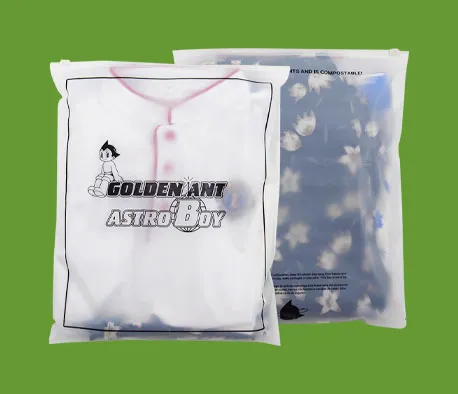
For light products such as clothing, accessories, cosmetics and printed matters, lightweight biodegradable bags with standard thickness can meet daily dustproof and packaging needs, controlling procurement costs to the greatest extent. For food, snacks and daily necessities that require moisture-proof and fresh-keeping functions, composite biodegradable film structures are required to enhance barrier performance and prevent moisture and oxidation. For heavy goods, hardware accessories and products with sharp edges, thickened and tensile-reinforced biodegradable bags are essential to avoid cracking and damage during transportation. Solving the mismatch between material structure and product attributes can eliminate the core pain point of “good environmental protection but poor practicality” and help brands achieve both green packaging and product protection.
Avoid Over-Customization and Unqualified Green Claim Risks
In brand packaging customization, many procurement teams fall into two typical traps: over-customization that damages degradable performance, and irregular green printing that triggers greenwashing risks. Unlike ordinary plastic bags, biodegradable bags have strict technical limits in printing and post-processing. Excessive craftsmanship will destroy the original molecular structure of degradable materials, leading to failure to degrade naturally.
Common problematic customizations include excessive multi-layer overprinting, thick coating lamination, and non-environmental adhesive processes, which will cause the bags to lose full degradation ability. In addition, randomly printing slogans such as “100% eco-friendly” and “zero pollution” without official certification will make brands face regulatory investigations and public doubt. The best brand solution is to adopt minimalist, low-carbon customization: retain core brand logo and product information, select food-grade and degradable ink, and abandon redundant decorative processes. This method not only ensures complete degradation performance of the packaging, but also creates a high-end, concise green brand image, solving the dual pain points of customization failure and compliance risks.
Adopt Stable Batch Production to Solve Shipment and Consistency Pain Points
For long-term brand operation, unstable batch quality and uncontrollable delivery cycle are the most troublesome procurement problems. Many small factories use unstable recycled degradable materials, resulting in large color differences, uneven bag transparency and inconsistent degradation effects between batches. Meanwhile, insufficient raw material reserves often cause delayed delivery, disrupting brand new product launches and peak-season sales plans.
The ideal packaging solution for brands is to cooperate with manufacturers with fixed material supply chains and standardized batch production systems. Formal suppliers lock exclusive material formulas and production parameters for long-term brand orders, ensuring consistent texture, color and performance of each batch of biodegradable bags. In terms of delivery, reliable manufacturers reserve sufficient raw material inventory and formulate peak-season production schedules to support flexible order replenishment and urgent order delivery. Stable quality and punctual delivery completely solve the pain points of inconsistent brand packaging presentation and disrupted supply chains, helping brands maintain unified green market positioning all year round.
Final Verdict
The best biodegradable bag solution is not the most high-end or expensive option, but the one that perfectly matches your brand’s sales scenarios, product attributes, customization demands and long-term operation plans. By selecting targeted degradation grades, matching scientific material structures, avoiding risky over-customization, and stabilizing batch production and delivery, brands can easily adopt compliant, practical and cost-effective biodegradable packaging. This not only helps enterprises meet global environmental policies, but also shapes a credible sustainable brand image and creates long-term market competitiveness.
BUYER QUESTIONS